Best Maternity Belts for Round Ligament Pain
Research-backed picks, judged on lift low at the front where the ligament attaches, not on lumbar bracing.
| # | Pick | Best for | Score | Price |
|---|---|---|---|---|
| 1 |  KeaBabies Pregnancy Belly BandsBreathable mesh band, pelvic and lower-back support | All-day wear for a pain that comes and goes | 9.0/10 | |
| 2 | 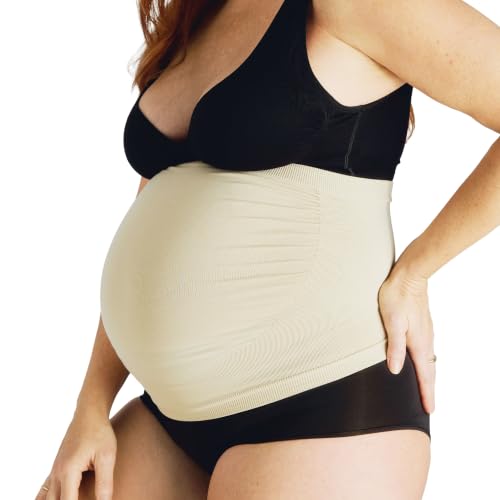 Belly Bandit Belly Boost Bump Support Pregnancy BandPull-on bump support, no fastening at all | Even lift with nothing to dig in | 8.8/10 | |
| 3 |  NeoTech Care Pregnancy Belly Band Maternity BeltUnder-belly belt with a wide back panel, sized M to XXL | Ligament pain that comes with back pain | 8.6/10 | |
| 4 |  AZMED Maternity Belt Back Support Abdominal BinderUnder-belly belt, one wide adjustable band | Trying a belt without spending much | 8.3/10 | |
| 5 |  Momcozy CozySupport 3D Ergonest Maternity Belly BandContoured band with a shaped back panel | A bump that has outgrown a flat band | 8.1/10 |
Rows link to the full write-up below. Scores are ours, from published specs and what buyers consistently report — we have not worn these.
By Selena H. · Last reviewed: October 2026
As an Amazon Associate, we earn from qualifying purchases. We do not set prices: the figure in each button is Amazon’s own, as of the date shown, and Amazon is authoritative when you click. How this site is funded.
This is general information, not medical advice. Talk to your midwife, OB or GP about your own symptoms. Severe or sudden pain, bleeding, a fever, or regular contractions before 37 weeks need a call to your provider now — before you buy anything.
The short answer
Buy a thin low-sitting band rather than a structured back-support belt. Round ligament pain is a sharp, brief pull low at the side of the bump, triggered by standing up, rolling over, coughing or sneezing. What helps is lifting the bottom of the bump so the ligament is not taking the full forward weight — which is a low front job, not a lumbar one. The best belt here is the one you will keep on all day, because the pain is intermittent and a belt in a drawer does nothing.
What round ligament pain is, and why the belt choice follows from it
The round ligaments run from the upper sides of the uterus down and forward into the groin, one on each side. In pregnancy they stretch and soften, and when they are pulled suddenly — by a cough, a sneeze, standing up quickly or turning over in bed — the result is a sharp, short pull low on one side, often the right. It is one of the most common aches of the second trimester, and it usually settles.
That mechanism tells you exactly what a belt needs to do. The ligament is being stretched by the forward and downward weight of the uterus, so the useful intervention is to carry some of that weight from below: a band sitting low across the front, under the bump, lifting. A belt that braces the lumbar spine is treating a different problem, which is why the strongest back-support belts are not the top picks here.
One important caveat before any of the rest. Round ligament pain is brief and movement-triggered. Pain that is constant, rhythmic, severe, on both sides low down, or that comes with bleeding, fever, a burning sensation when you pass urine or any tightening that comes and goes at intervals is not this, and it needs assessing the same day rather than a belt. If you are not sure which you have, treat it as the thing that needs a phone call.
How we picked
We set the criteria before looking at any product. A belt for round ligament pain earns its place if it lifts low at the front where the ligament attaches, it stays where you put it while you are moving, it can be adjusted quickly with one hand, it is discreet enough to wear under normal clothes, it is comfortable enough to keep on for hours, and its adjustment range covers a reasonable span of the pregnancy. Every pick above is scored on those six.
We then confirmed each product against a live listing so nothing here is discontinued or invented. We have not worn these. What we can tell you is the construction — where the support sits, how it fastens, what the size range is — and the failure patterns that recur in what buyers report, which for this category are consistently two: bands that ride up over the curve of the bump within an hour of walking, and one-size belts that fit the middle of the range and nobody else. The method is on how we pick.
The buying guide
Low and under, not high and around
The belt has to sit below the bump, across the pubic bone and up under the curve. If it is sitting on the bump, it is pressing rather than lifting, and pressing does nothing for a ligament. This is the single most common fitting error, and it is usually caused by buying a band that is too narrow for the job and then wearing it where it is comfortable rather than where it works.
Comfort beats strength for an intermittent pain
A structured belt gives more support and gets worn less. For a pain that arrives four or five times a day, total hours worn matters more than peak support, which is why the thin mesh band is our top pick ahead of stronger belts. If your pain is constant rather than intermittent, the calculation reverses — and it is also a sign that this may not be ligament pain. Our comparison of belly bands versus support belts goes through the trade-off properly.
Wear it for the movements, not the whole day, if you prefer
There is a reasonable alternative strategy: put the band on for the things that trigger the pain — a walk, a shift on your feet, a car journey — and take it off the rest of the time. This avoids the main downside of a support belt, which is that wearing one continuously lets the muscles that would otherwise do the work do less of it. Our page on how long you can wear a belly band covers the sensible limits, and are maternity support belts safe answers the question underneath that.
Buy sized rather than one-size if you can
One-size bands fit the middle of their range well and the ends badly. If you have a short torso, a long torso, or a bump that is already large for your dates, a belt sold in M to XXL will fit better than one sold as universal. There is a dedicated plus-size belt roundup if the standard range has not worked for you before.
Heat helps, and so does slowing down the trigger movements
A warm pack on the sore side for fifteen minutes is one of the few other things that reliably takes the edge off. The other is mechanical: bend your knees and brace before you cough or sneeze, and roll onto your side with knees together before sitting up rather than sitting straight up from flat. Our full guide to round ligament pain relief goes through the technique in detail, and it is worth reading alongside this page — the belt is one part of the answer, not the whole of it.
If a belt does not help
Two or three days of consistent use is enough to know. If the pain is unchanged, either the fit is wrong — almost always because the band is sitting too high — or the pain is not round ligament pain. The most common alternative explanations are pelvic girdle pain, which is felt in the pubic joint or across the back of the pelvis and needs a pelvic belt rather than a belly band, and lower back pain, which is covered by the back-pain belt picks. Our comparison of maternity belt versus pelvic belt is the fastest way to work out which family you are in. A midwife, physiotherapist or doctor can tell these apart in a few minutes, and a referral to a women's health physiotherapist is the standard route when it is not resolving.
Every pick, in detail
Scores below are ours. They come from the published specification sheets and from the patterns in what buyers consistently report — not from wearing these ourselves.
Top pick · All-day wear for a pain that comes and goes
9.0/10KeaBabies Pregnancy Belly Bands
Round ligament pain is intermittent and movement-triggered, which means the belt you want is the one you will actually keep on all day rather than the one with the most support. A thin mesh band is comfortable enough to forget about, sits low enough to lift the bottom of the bump, and disappears under a t-shirt — and a band worn for eight hours beats a stronger belt worn for two.
- Type
- Breathable mesh belly band
- Support
- Pelvic, hip and lower back
- Size range
- M/L through 2XL
- Under clothes
- Thin enough to disappear under a tee
What works
- Thin enough to wear all day without noticing it
- Sits low across the front, which is where the lift is needed
- Invisible under a normal top, so it works at the office
- Sized from M/L to 2XL rather than one-size-fits-nobody
What it gives up
- Light support — not enough if the pain is constant rather than intermittent
- Mesh snags on knitwear and rough hook-and-loop
- Needs re-seating after a few hours of walking
- Does little for the lower back on its own
Skip it ifthe pain is constant and severe rather than a sharp catch when you move.
| Lift at the lower bump | 8.3 |
|---|---|
| Stays put when you move | 8.0 |
| Adjusts fast one-handed | 8.8 |
| Invisible under clothes | 9.5 |
| Comfort over hours | 9.5 |
| Range as the bump grows | 8.8 |
#ad · affiliate link · price as of November 28, 2026
Pick 2 · Even lift with nothing to dig in
8.8/10Belly Bandit Belly Boost Bump Support Pregnancy Band
The pull-on construction is the reason this one works for ligament pain specifically. Hook-and-loop belts concentrate their pull at the closure, which is exactly the wrong thing when the problem is a ligament being stretched asymmetrically; a seamless pull-on band spreads the lift evenly across the whole lower bump. Nothing to fasten also means nothing to adjust wrongly in a hurry.
- Type
- Pull-on bump support band
- Closure
- None — steps on, no hook-and-loop
- Support
- Even belly lift plus lower back
- Under clothes
- Smooth, no fastening to show
What works
- Even lift across the whole lower bump rather than at a closure
- No hook-and-loop to show through clothes or catch on fabric
- Smooth enough to wear under fitted tops
- Supports the lower back as a side effect of the lift
What it gives up
- No adjustment, so it is right or it is the wrong size
- Has to be pulled on over the hips, which is awkward late on
- Costs more than the hook-and-loop bands
- Sizing changes through the pregnancy, so one may not span it
Skip it ifyou need to loosen and tighten through the day.
| Lift at the lower bump | 9.3 |
|---|---|
| Stays put when you move | 9.0 |
| Adjusts fast one-handed | 5.5 |
| Invisible under clothes | 9.3 |
| Comfort over hours | 9.0 |
| Range as the bump grows | 7.0 |
#ad · affiliate link · price as of November 28, 2026
Pick 3 · Ligament pain that comes with back pain
8.6/10NeoTech Care Pregnancy Belly Band Maternity Belt
The most common real-world case is not pure ligament pain but ligament pain plus a sore lower back, because both are driven by the same forward load. This is the belt for that: it cradles under the belly where the ligament attaches and the wide back panel takes the lumbar side at the same time. Being sized rather than one-size is the other reason it is here.
- Type
- Under-belly belt with wide back panel
- Closure
- Hook-and-loop
- Support
- Belly lift plus back and pelvic
- Size range
- Sized M to XXL rather than one-size
What works
- Under-belly cradle lifts exactly where the ligament pulls
- Wide back panel handles the lower back at the same time
- Sized M to XXL, so the fit is a fit rather than a guess
- Firm enough to make a difference on a walk
What it gives up
- Bulkier than a mesh band and visible under fitted clothes
- Warm against the skin over a long day
- Hook-and-loop needs re-seating as you move
- Too much support if the pain is only occasional
Skip it ifyou need something invisible under work clothes.
| Lift at the lower bump | 9.3 |
|---|---|
| Stays put when you move | 8.5 |
| Adjusts fast one-handed | 8.5 |
| Invisible under clothes | 6.5 |
| Comfort over hours | 7.8 |
| Range as the bump grows | 9.0 |
#ad · affiliate link · price as of November 28, 2026
Pick 4 · Trying a belt without spending much
8.3/10AZMED Maternity Belt Back Support Abdominal Binder
Round ligament pain usually resolves on its own, often within weeks, which makes a cheap belt a more rational purchase than an expensive one. This is the plain version of the idea: one wide adjustable band that sits under the belly and lifts. Adjustment range is its best feature, since it covers more of the pregnancy than a sized belt will.
- Type
- Under-belly support belt
- Closure
- Hook-and-loop, adjustable
- Support
- Pelvic, waist and lower back
- Size range
- One adjustable band across a wide range
What works
- Cheap enough to buy for a problem that may pass in a month
- Very wide adjustment range covers a long span of the bump
- Simple single-band design with nothing to learn
- Lifts from under the belly, which is the right place
What it gives up
- One-size design fits the middle of the range best
- Rides up when you walk and needs resetting often
- Edges can dig in on a shorter torso
- No back panel to speak of
Skip it ifyou have a short torso — the band depth will not suit you.
| Lift at the lower bump | 8.5 |
|---|---|
| Stays put when you move | 7.0 |
| Adjusts fast one-handed | 8.8 |
| Invisible under clothes | 7.0 |
| Comfort over hours | 7.3 |
| Range as the bump grows | 9.3 |
#ad · affiliate link · price as of November 28, 2026
Pick 5 · A bump that has outgrown a flat band
8.1/10Momcozy CozySupport 3D Ergonest Maternity Belly Band
A flat band pulls in a straight line across a shape that is not straight, and by the third trimester that means it slides down over the curve. A contoured cradle follows the shape instead, which is why this one stays where you put it for longer. The cost is bulk — it is the least discreet thing here and shows under anything fitted.
- Type
- Contoured belly band with shaped back panel
- Closure
- Hook-and-loop, adjustable
- Support
- Belly cradle plus lumbar
- Under clothes
- Bulkier than a flat mesh band
What works
- Contoured cradle follows the bump instead of sliding off it
- Stays in position longer than a flat band when walking
- Shaped back panel adds lumbar support without a second garment
- Good for a large bump late in pregnancy
What it gives up
- Bulkiest option here and visible under fitted clothes
- Warm, with limited airflow at the panel
- More to put on than a simple band
- Over-specified if the pain is mild
Skip it ifyou are in the second trimester with a small bump.
| Lift at the lower bump | 9.0 |
|---|---|
| Stays put when you move | 9.3 |
| Adjusts fast one-handed | 7.8 |
| Invisible under clothes | 5.5 |
| Comfort over hours | 7.8 |
| Range as the bump grows | 8.5 |
#ad · affiliate link · price as of November 28, 2026
Pick 6 · Treating the pain as well as supporting the bump
7.9/10GABRIALLA Maternity Belt 2 in 1 Support and Hip Wrap
A sharp ligament catch responds to warmth as well as to support, and this is the only belt here with somewhere to put a heat pack. That is a genuinely useful combination for an evening after a day on your feet. It also converts to a postpartum hip wrap, which extends its life past the point where the ligament problem has resolved.
- Type
- Maternity belt that converts to a postpartum hip wrap
- Closure
- Hook-and-loop with side straps
- Extras
- Pocket for a hot or cold pack
- Use
- Pregnancy and postpartum
What works
- Pocket takes a warm or cool pack over the sore side
- Converts to a postpartum hip wrap, so it lasts past the pregnancy
- Side straps allow fine adjustment of the lift
- Firm support with a structured feel
What it gives up
- Bulky, and the pocket adds thickness at the front
- More straps means more to get right each time
- Costs more than the plain bands
- Heat pack has to be bought separately
Skip it ifyou want the simplest possible thing to put on in the morning.
| Lift at the lower bump | 8.5 |
|---|---|
| Stays put when you move | 8.3 |
| Adjusts fast one-handed | 7.0 |
| Invisible under clothes | 5.8 |
| Comfort over hours | 7.8 |
| Range as the bump grows | 8.8 |

#ad · affiliate link · price as of November 28, 2026
Questions people actually ask
Does a belly band help with round ligament pain?
For many people, yes. The mechanism is straightforward: the band lifts some of the forward and downward weight of the uterus, which is what is pulling on the ligament in the first place.
It works best worn low, under the bump, rather than across it. A band sitting on the bump is pressing rather than lifting, which does not help the ligament.
Which is better for round ligament pain, a belly band or a support belt?
A thin low-sitting band for most people. Round ligament pain is intermittent and movement-triggered, so the total hours you keep the band on matters more than the peak support it offers.
A structured support belt is the better choice if you also have significant lower back pain, since the wide back panel handles both at once. Constant rather than intermittent pain is also a reason to be reassessed, because it may not be ligament pain.
Where should a maternity belt sit for round ligament pain?
Low across the front, below the bump and over the pubic bone, angled up under the curve so it lifts. You should feel the weight of the bump transfer onto the band when you stand.
If it is sitting on the bump itself it is in the wrong place, which is the most common reason people conclude a belt does not work for them.
How long does round ligament pain last?
Each episode is brief - seconds to a couple of minutes - and it is typically triggered by movement such as standing up, rolling over, coughing or sneezing. As a phase of pregnancy it most commonly runs through the second trimester and often eases.
Pain that is constant, rhythmic, severe, accompanied by bleeding or fever, or that comes and goes at regular intervals is not round ligament pain and should be assessed the same day.
Can I wear a maternity belt all day for round ligament pain?
A light band, generally yes, though taking it off for part of the day is sensible. The common guidance is to avoid relying on a structured support belt continuously, so the muscles that would otherwise carry the load keep doing some of the work.
A practical approach is to wear it for the activities that trigger the pain - walking, standing shifts, car journeys - and take it off when you are resting.
What else helps round ligament pain besides a belt?
A warm pack on the sore side for about fifteen minutes, moving more slowly through the movements that trigger it, and bracing your abdominal muscles before you cough or sneeze.
Rolling onto your side with your knees together before sitting up, rather than sitting straight up from flat, removes one of the most reliable triggers. If it is not settling, a referral to a women's health physiotherapist is the usual next step.
Sources
- MedlinePlus, US National Library of Medicine. Aches and pains during pregnancy
- American College of Obstetricians and Gynecologists. Back Pain During Pregnancy
- NHS. Pelvic pain in pregnancy
- MedlinePlus, US National Library of Medicine. Common symptoms during pregnancy
Who wrote this
Selena H.
Selena owns Bump & Bolster and researches and writes every page herself. She built the site around the problems pregnancy throws at you in the order they arrive: sleep first, then pain, then nothing fitting, then recovery.