Belly Binder vs Faja: Postpartum
Research-backed, and the honest version: one is a recovery aid for the early weeks, the other is shapewear with a reputation.
| # | Pick | Best for | Score | Price |
|---|---|---|---|---|
| 1 |  Frida Mom Belly Binder for Natural and C-Section Recovery9 in binder, hook-and-loop, vaginal or c-section | The first two to six weeks after any birth | 9.0/10 | |
| 2 |  Mamaway SSnugFit Postpartum Belly Band C-Section Support GirdleGirdle-style wrap support, breathable fabric | The fitted end of the range, worn under clothes | 8.5/10 | |
| 3 |  BraceAbility Medical Abdominal Stomach Binder for Diastasis RectiMedical abdominal binder, sizes up to XXL | A caesarean, or abdominal separation | 8.3/10 | |
| 4 | SHAPERMINT High Waisted Tummy Control Compression LeggingsHigh-waisted tummy-control leggings, petite to plus | Months two onward, when a binder is no longer the point | 8.0/10 |
Rows link to the full write-up below. Scores are ours, from published specs and what buyers consistently report — we have not worn these.
By Selena H. · Last reviewed: October 2026
As an Amazon Associate, we earn from qualifying purchases. We do not set prices: the figure in each button is Amazon’s own, as of the date shown, and Amazon is authoritative when you click. How this site is funded.
This is general information, not medical advice. Talk to your midwife, OB or GP about your own symptoms. Severe or sudden pain, bleeding, a fever, or regular contractions before 37 weeks need a call to your provider now — before you buy anything.
The short answer
Buy a binder for the first weeks. A faja is fitted compression shapewear, and it is the wrong garment while your measurements are still changing daily. The useful thing both do is the same: steady compression makes standing up, walking and coughing less painful in the early days, especially after a caesarean. Neither one reshapes your abdomen, shrinks your uterus faster or closes abdominal separation, whatever the marketing says. Buy on comfort and adjustability, and treat any shape claim as advertising.
What each word actually means
A belly binder is a wide band, usually eight to twelve inches deep, that wraps around the abdomen and fastens with hook-and-loop. It is adjustable across a range, it goes on while you are lying down, and it is designed to be worn over underwear and under pajamas for a few weeks. Medical abdominal binders — the kind issued after abdominal surgery — are the same object sold without any postpartum styling.
A faja is a fitted compression garment, originally from Latin America and strongly associated with post-surgical recovery there. The defining features are that it is cut to a size rather than adjusted to one, it usually covers more of the body — hips, sometimes the back and bust — and it fastens with hooks, a zip or by being pulled on. In practice, in English-language shops, "faja" is applied to anything from a genuine post-surgical garment to ordinary high-compression shapewear.
That vocabulary problem is worth knowing about before you spend, because the word tells you very little about the garment. The things that actually matter are: how much adjustment it has, how high it sits relative to a caesarean incision, and whether you can get into it while sore.
The decision table
| Belly binder | Faja | |
|---|---|---|
| Form | Wide adjustable band | Fitted garment, sized |
| Adjustment range | Wide — hook-and-loop | Narrow — hooks or zip |
| Best window | Day 1 to about week 6 | Week 4 onward |
| Getting it on while sore | Easy — fasten lying down | Hard — step in or pull on |
| Coverage | Abdomen only | Abdomen, hips, sometimes more |
| Under clothes | Visible line | Smoother |
| After a caesarean | Standard choice | Only if it clears the incision |
| Reshapes your body | No | No |
What compression does and does not do
The evidence for abdominal compression after birth is strongest for the thing it is least often sold on: comfort and pain. After a caesarean in particular, a binder makes the mechanics of standing up, walking and coughing less painful, and people who are more comfortable tend to move around sooner, which matters for recovery. Some people also find it helps with the strange unsupported feeling in the abdomen in the first days after any birth.
What it does not do: it does not make your uterus contract faster, it does not burn fat, it does not close diastasis recti, and it does not permanently change the shape of your abdomen. Your abdomen changes over months as the uterus involutes, fluid shifts and tissue recovers — and that happens whether or not you wear anything. The honest framing is that a binder is a comfort and mobility aid for a few weeks, which is a real benefit and a smaller one than the category advertises. Our page on whether postpartum belly wraps work goes through this properly.
One genuine caution: compression worn too tight, or worn constantly for months, pushes downward pressure onto the pelvic floor, which is already recovering. That is the argument for a few hours a day rather than all day, and for stopping when the early weeks are over. Our guide on how long to wear a belly wrap covers the sensible limits.
How we picked
We set the criteria before looking at any product, and used one rubric for both sides: whether the compression is even rather than concentrated, how much it can be adjusted as swelling drops, whether it is comfortable for several hours, whether it sits clear of a caesarean incision, how visible it is under clothes, and whether the product is honest about what it does. That last axis is deliberate in this category.
We then confirmed each product against a live listing so nothing here is discontinued or invented. We have not worn these. What we can tell you is the construction — height, closure, size range, where it sits — and the failure patterns that recur in what buyers report, which here are consistently two: garments that roll or fold at the top edge on a short torso, and fitted garments bought in week one that no longer fit by week four. The method is on how we pick.
Which to buy, by situation
You have had a caesarean
A binder, and check with your maternity team first about when to start — commonly once the dressing is off and the wound is closed. Height matters: the garment should sit clear of the incision line, not across it. A dedicated c-section binder with a pocket for a cold pack is worth the small premium. See c-section recovery products.
You have had a vaginal birth
Optional. Some people find a binder helps with the unsupported feeling in the first week and others never want one. If you buy, buy adjustable and plan on a few hours a day rather than continuous wear. Our postpartum belly wrap roundup is the place to compare.
You are four weeks out or more
This is where the fitted garments start to make sense, because your measurements have mostly stopped moving. It is also the point at which a high-waisted compression legging is usually the better purchase than either — comfortable all day, invisible under clothes, and it lets you actually do things. See postpartum compression leggings.
You are worried about abdominal separation
Neither garment closes diastasis recti, and a binder is not a treatment for it. What helps is assessment and a graded program of specific exercises, usually from a women's health physiotherapist. Compression may make you more comfortable while you get there, which is worth something, but do not buy a garment expecting it to do the work.
What you want is to feel like your clothes fit
Then buy clothes, not compression. This is the most common unspoken version of the question, and the answer is high-waisted soft trousers and tops that are not fitted at the waist. Our postpartum comfortable clothes page is for exactly this.
Where the other comparisons sit
A binder and a wrap are near-synonyms in practice, and we compare them in postpartum belly wrap versus binder. A waist trainer is a different thing again — tighter, more aggressive and sold on shape rather than recovery — and belly wrap versus waist trainer is the page for that. For the timeline that governs all of this, see the postpartum recovery timeline, and the fourth trimester page covers the first twelve weeks as a whole.
Every pick, in detail
Scores below are ours. They come from the published specification sheets and from the patterns in what buyers consistently report — not from wearing these ourselves.
Top pick · The first two to six weeks after any birth
9.0/10Frida Mom Belly Binder for Natural and C-Section Recovery
This is the binder side of the comparison and the one to buy if you are buying once. Nine inches of height covers the abdomen without reaching the ribs, the hook-and-loop closure can be loosened as swelling drops rather than being a fixed size, and it is cut to sit clear of a caesarean incision line. A binder is a recovery garment and this is a recovery garment.
- Height
- 9 in
- Use
- Vaginal and c-section recovery
- Closure
- Hook-and-loop
- Compression
- Even, adjustable
What works
- Adjustable as swelling changes, which a fitted garment is not
- Even compression across the whole abdomen
- Height clears a caesarean incision rather than sitting on it
- Easy to put on lying down, which matters in week one
What it gives up
- Bulky under fitted clothes
- Hook-and-loop shows a line through thin fabric
- Rolls at the top edge on a short torso
- Does nothing once the early-weeks swelling has gone
Skip it ifyou are past the first couple of months and want something to wear under clothes daily.
| Even compression | 9.0 |
|---|---|
| Adjusts as swelling drops | 9.5 |
| Comfort over hours | 8.5 |
| Works over an incision | 9.3 |
| Invisible under clothes | 6.0 |
| Honest about what it does | 9.3 |
#ad · affiliate link · price as of November 28, 2026
Pick 2 · The fitted end of the range, worn under clothes
8.5/10Mamaway SSnugFit Postpartum Belly Band C-Section Support Girdle
The closest thing here to the faja idea: a girdle-style garment rather than a band, cut to follow the body and worn under clothes rather than over pajamas. That makes it the more wearable option once you are leaving the house, and the less useful one in the first fortnight when your measurements are changing by the day.
- Type
- Girdle-style support
- Fabric
- Breathable
- Use
- C-section support
- Closure
- Wrap
What works
- Girdle cut follows the body rather than sitting on it as a band
- Breathable fabric, which fitted compression often is not
- Smoother under clothes than a hook-and-loop binder
- Marketed for caesarean support rather than for shaping
What it gives up
- Fitted cut means far less adjustment as swelling drops
- Harder to get on than a wrap, especially while sore
- A single size may not span the first three months
- More expensive than a plain binder
Skip it ifyou are in the first two weeks and your measurements are still changing daily.
| Even compression | 8.8 |
|---|---|
| Adjusts as swelling drops | 6.0 |
| Comfort over hours | 8.0 |
| Works over an incision | 8.0 |
| Invisible under clothes | 8.8 |
| Honest about what it does | 8.3 |
#ad · affiliate link · price as of November 28, 2026
Pick 3 · A caesarean, or abdominal separation
8.3/10BraceAbility Medical Abdominal Stomach Binder for Diastasis Recti
A medical abdominal binder is the unglamorous version of the same object, sold for post-surgical support rather than for postpartum shaping, and that is a point in its favor. The compression is even, the sizing goes to XXL, and nothing about the listing claims it will change your shape. If you have had a caesarean, this is the family of product the surgical side of the question lives in.
- Type
- Medical abdominal binder
- Size range
- Up to XXL
- Use
- Diastasis recti, postpartum, post-surgical
- Closure
- Hook-and-loop
What works
- Sold as post-surgical support, so no shaping claims to discount
- Even compression with no contouring to fight your own shape
- Size range to XXL, which the fashion-led wraps often lack
- Firm enough to make standing up noticeably easier after surgery
What it gives up
- Entirely utilitarian, and looks it
- Stiffer and warmer than the softer postpartum wraps
- Visible under anything fitted
- No postpartum-specific shaping at all
Skip it ifyou want something you can wear discreetly under work clothes.
| Even compression | 9.0 |
|---|---|
| Adjusts as swelling drops | 8.3 |
| Comfort over hours | 7.3 |
| Works over an incision | 9.0 |
| Invisible under clothes | 5.0 |
| Honest about what it does | 9.5 |
#ad · affiliate link · price as of November 28, 2026
Pick 4 · Months two onward, when a binder is no longer the point
8.0/10SHAPERMINT High Waisted Tummy Control Compression Leggings
The honest alternative to both. By the second or third month the early-weeks swelling has gone and what most people actually want is to feel held together under normal clothes while moving around. A high-waisted compression legging does that, is comfortable all day, and has no pretensions about reshaping anything.
- Rise
- High waisted
- Size range
- Petite to plus
- Waistband
- No-roll
- Use
- Everyday shaping
What works
- Comfortable for a full day in a way a binder is not
- Invisible under clothes, because it is clothes
- No-roll waistband sits above a caesarean incision
- Petite to plus size range
What it gives up
- Light compression compared with a binder
- Not appropriate immediately after surgery
- Has to be pulled on, which is hard in the first weeks
- Shapewear rather than a recovery garment
Skip it ifyou are in the first fortnight after a caesarean.
| Even compression | 6.5 |
|---|---|
| Adjusts as swelling drops | 7.0 |
| Comfort over hours | 9.5 |
| Works over an incision | 8.0 |
| Invisible under clothes | 9.5 |
| Honest about what it does | 8.5 |
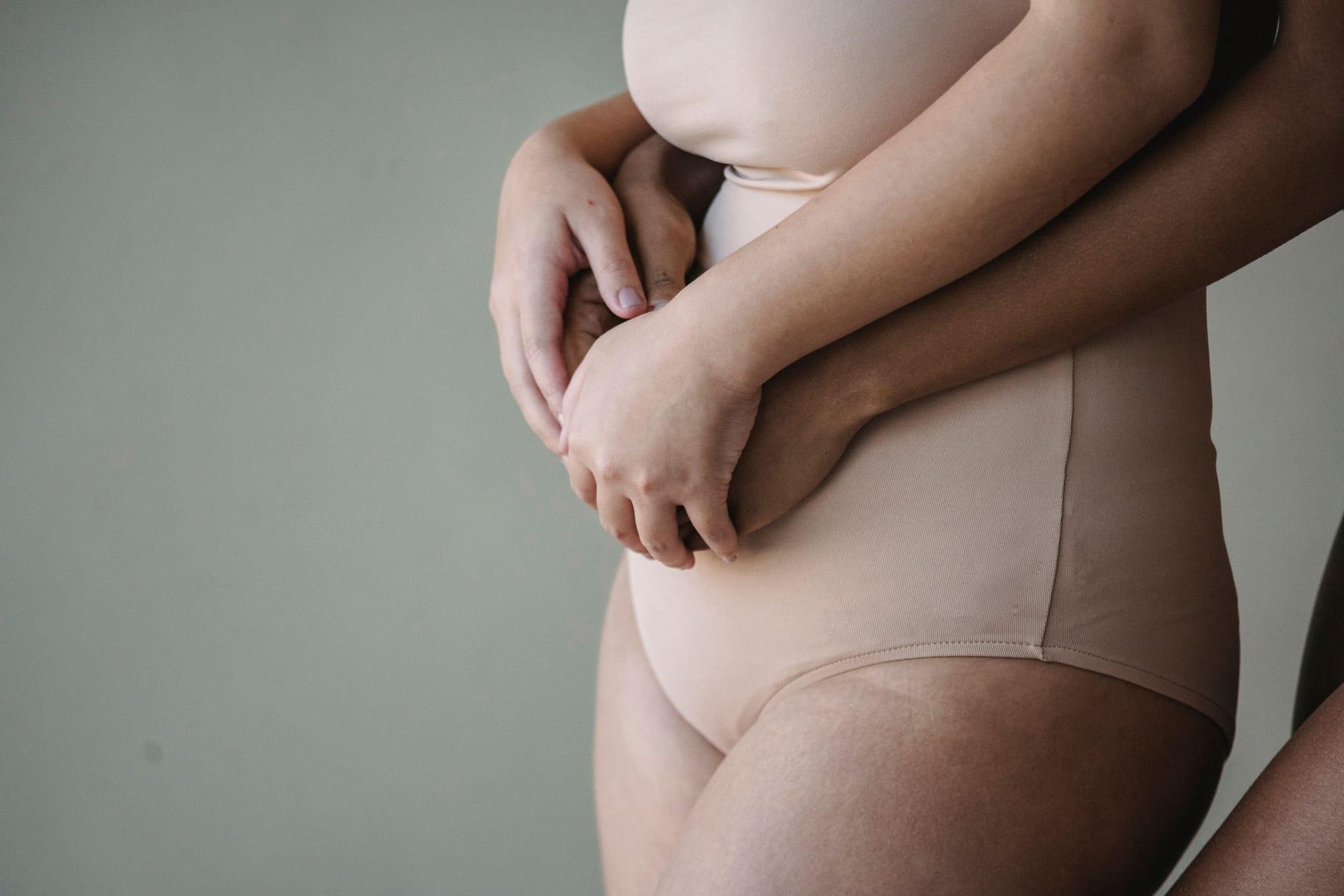
#ad · affiliate link · price as of November 28, 2026
Questions people actually ask
What is the difference between a belly binder and a faja?
A binder is a wide adjustable band that fastens with hook-and-loop, adjusts across a range as swelling drops, and is designed for the first few weeks. A faja is a fitted compression garment, sized rather than adjusted, usually covering more of the body and fastening with hooks, a zip or by pulling on.
In English-language shops the word faja is applied to everything from genuine post-surgical garments to ordinary high-compression shapewear, so the label tells you little. Judge on adjustment range, height relative to any incision, and whether you can get into it while sore.
Which is better after a c-section, a binder or a faja?
A binder, in the early weeks. It can be fastened while you are lying down, it adjusts as swelling drops, and the height can be chosen to sit clear of the incision rather than across it.
Ask your maternity team when to start - commonly once the dressing is off and the wound is closed. A fitted garment you have to pull on is difficult and uncomfortable in the first fortnight after abdominal surgery.
Does a faja flatten your stomach after birth?
Not permanently. Any garment with compression makes you look smoother while you are wearing it, and that effect ends when you take it off.
The abdomen changes over months as the uterus involutes, fluid shifts and tissue recovers, and that happens whether or not you wear compression. The real benefit of either garment is comfort and easier movement in the early weeks.
How long should I wear a postpartum binder or faja each day?
A few hours at a time rather than continuously, and for the early weeks rather than for months. Compression worn very tight or worn constantly adds downward pressure on a pelvic floor that is already recovering.
Take it off to sleep, and stop using it once the early swelling has settled and it is no longer making movement easier.
Will a binder or faja fix diastasis recti?
No. Neither closes abdominal separation. What helps is assessment and a graded program of specific exercises, usually from a women's health physiotherapist.
Compression can make you more comfortable in the meantime, which has value, but it should not replace getting the separation looked at if it is not resolving.
What size postpartum binder or faja should I buy?
Binders are sized by a range you fall into, and the wide hook-and-loop adjustment means a single size usually covers the whole early period. Buy to your current measurement rather than your pre-pregnancy one.
Fitted garments are the harder case, because the measurement you take in week one will not be your measurement in week four. If you want a fitted garment, buy it at around four weeks rather than before the birth.
Sources
- American College of Obstetricians and Gynecologists. Cesarean Birth
- NHS. Caesarean section: Recovery
- American College of Obstetricians and Gynecologists. Postpartum Pain Management
- NHS. Your post-pregnancy body
- March of Dimes. Your body after baby: the first 6 weeks
Who wrote this
Selena H.
Selena owns Bump & Bolster and researches and writes every page herself. She built the site around the problems pregnancy throws at you in the order they arrive: sleep first, then pain, then nothing fitting, then recovery.