Best Compression Socks for Postpartum Swelling
Research-backed picks for the swelling that arrives after the birth, ranked on compression level, whether you can get them on over a swollen foot, and how many pairs you get.
| # | Pick | Best for | Score | Price |
|---|---|---|---|---|
| 1 |  Momcozy Medical Grade Compression Socks 20-30 mmHg20-30 mmHg knee-high, marketed as medical grade | The default pick: heavier swelling in the first fortnight | 9.0/10 | |
| 2 | 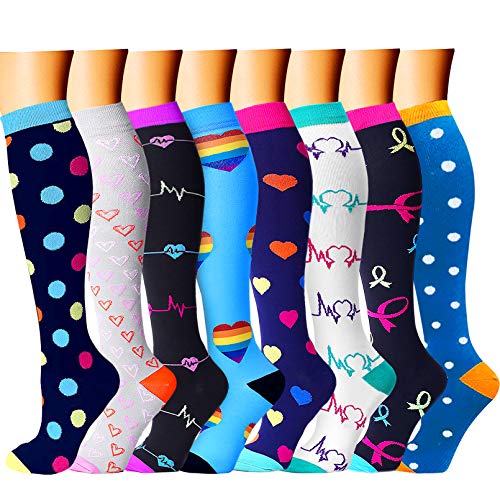 CHARMKING Compression Socks 15-20 mmHg 8 Pairs15-20 mmHg knee-high, eight pairs per purchase | The budget pick: eight pairs, so laundry never decides it | 8.8/10 | |
| 3 |  LEVSOX Wide Calf Compression Socks Plus Size 15-20mmHg15-20 mmHg, wide-calf plus-size cut, sized through the leg | A calf that a standard sock cuts into | 8.6/10 | |
| 4 |  LEVSOX Cotton Compression Socks 20-30mmHg Knee High20-30 mmHg, cotton-rich knit, knee-high | Firm compression you have to wear all day indoors | 8.4/10 | |
| 5 |  Doc Miller Open Toe Compression Socks 8-15 mmHg8-15 mmHg open toe — the lightest compression here | A first try, or anyone who has given up on compression before | 8.1/10 |
Rows link to the full write-up below. Scores are ours, from published specs and what buyers consistently report — we have not worn these.
By Selena H. · Last reviewed: November 2026
As an Amazon Associate, we earn from qualifying purchases. We do not set prices: the figure in each button is Amazon’s own, as of the date shown, and Amazon is authoritative when you click. How this site is funded.
This is general information, not medical advice. Talk to your midwife, OB or GP about your own symptoms. Severe or sudden pain, bleeding, a fever, or regular contractions before 37 weeks need a call to your provider now — before you buy anything.
The short answer
Buy the Momcozy 20-30 mmHg socks if your legs and ankles are genuinely swollen after the birth, and the eight-pair CHARMKING 15-20 mmHg pack as the budget pick if the swelling is moderate and you would rather never be short of a clean pair. If you have had a C-section and cannot bend comfortably yet, start lighter — a sock you can get on unaided beats a firmer one you cannot.
Why swelling often gets worse after the birth
Most people expect the swelling to leave with the baby. For a lot of people it does the opposite for several days first: the extra fluid your body carried through pregnancy has to be cleared, intravenous fluids given during labor or a C-section add to it, and the legs are where gravity puts it while you are sitting still feeding. Puffy feet, ankles and calves in the first week or two after the birth are common and usually settle over a couple of weeks as the fluid is cleared.
Compression socks help because they do one specific thing: graduated pressure, tightest at the ankle and easing up the leg, supports the veins pushing fluid back up against gravity. That is why a knee-high sock is the right shape and an ankle sock is not, and why a sock that is too tight at the top of the calf makes things worse rather than better. The mechanism is identical to the one covered in our pregnancy compression socks guide, but the practical situation afterward is different enough to be worth its own page.
Swelling that is sudden, that affects one leg much more than the other, that comes with calf pain, warmth or redness, or that arrives with a headache, vision changes or pain under your ribs is a different matter entirely and needs same-day medical advice. Postpartum preeclampsia and blood clots both exist, both can appear days or weeks after the birth, and neither is something to manage with socks.
Which compression level, honestly
8-15 mmHg
Light. Easy to get on, comfortable to forget about, helps with the heavy-leg feeling. Right if you have never worn compression, if bending is still difficult, or if the swelling is mild. Not a treatment for real edema.
15-20 mmHg
The everyday band, and the right default for most people in the first postpartum weeks. Enough to make a visible difference to ankle swelling by the end of the day, still possible to put on yourself.
20-30 mmHg
Firm. The level to use when the swelling is substantial, when you are standing for long stretches, or when a lighter sock has not been enough. It is genuinely hard to put on, and it is the level worth checking with your provider rather than choosing by eye, particularly if you have any circulatory or diabetic history.
After a C-section, ease of putting them on is the spec that matters
This is the detail most roundups miss. For the first week or two after abdominal surgery, bending forward to pull a firm sock over a swollen heel is the single hardest part of wearing compression, and it is often simply not possible unaided. Two practical routes: buy a lighter band for the early days and step up later, or have someone help in the morning and keep the socks on all day. A sock donner is a few dollars and solves it outright.
The same logic applies to how many pairs you buy. Firm socks need washing often and dry slowly, so a single pair means days without them. That is the reason two of the picks above are multipacks despite the inconsistency that comes with cheap packs. Our C-section recovery products page covers the rest of the early-days kit, and the postpartum recovery timeline sets out what to expect week by week.
What else actually reduces the swelling
Compression is one part of it. Elevating your feet above hip level for twenty minutes a few times a day does more than people expect, and it is free. Moving regularly — short, frequent walks rather than one long one — keeps the calf muscle pumping, which is the body’s own mechanism for clearing leg fluid. Staying hydrated helps rather than hurts, counter-intuitively. Sitting still for hours with your legs down, which is exactly what feeding a newborn involves, is the thing that makes it worst, so it is worth propping your legs up while you feed.
If the swelling is in your hands and face rather than your legs, compression socks are not the answer and that pattern is more worth mentioning to your provider. And if your legs ached and swelled through pregnancy too, the pregnancy compression socks roundup and the swollen feet relief guide both cover the longer arc of this.
Every pick, in detail
Scores below are ours. They come from the published specification sheets and from the patterns in what buyers consistently report — not from wearing these ourselves.
Top pick · The default pick: heavier swelling in the first fortnight
9.0/10Momcozy Medical Grade Compression Socks 20-30 mmHg
The one to buy if your ankles disappeared after the birth rather than before it. Postpartum swelling is often worse than pregnancy swelling for the first week or so — the fluid you were carrying has to go somewhere and a lot of it arrives in your legs — and at that point the firmer 20-30 mmHg band is the one that does something you can feel by the end of the day. This is the pick from a maternity brand rather than a general hosiery brand, which shows in the listing being written for this situation rather than for flying. Two honest limits. Firm compression is hard work to put on, and over an already swollen foot after a C-section, when bending is the problem, you may need someone else to help for the first few days. And 20-30 mmHg is firm enough that it is worth a word with your provider rather than a guess.
- Compression
- 20-30 mmHg
- Grade
- Marketed as medical grade, FDA registered
- Height
- Knee high
- Use
- Flying, long shifts, heavier swelling
What works
- Firm 20-30 mmHg band, the right level for real swelling
- Knee-high, which is the height that matters for ankle and calf fluid
- Written and sized for pregnancy and postpartum use
- Holds its compression through repeated washing better than cheap packs
What it gives up
- Hard to get on, which is the whole problem after a C-section
- Warm to wear indoors in a heated room
- One pair per purchase, so you will want two
- Firm compression is worth checking with your provider first
Skip it ifyou are mostly sitting with your feet up and the swelling is mild — lighter compression is more comfortable and will get worn.
| Compression that matches the swelling | 9.5 |
|---|---|
| Gets on over a swollen foot | 6.0 |
| Comfortable for a whole day | 7.8 |
| Fits a calf that is still changing | 7.5 |
| Breathes while you are stuck sitting | 7.0 |
| Pairs per purchase | 6.0 |
#ad · affiliate link · price as of November 28, 2026
Pick 2 · The budget pick: eight pairs, so laundry never decides it
8.8/10CHARMKING Compression Socks 15-20 mmHg 8 Pairs
The budget pick on this page and the most practical purchase on it. Eight pairs of 15-20 mmHg socks costs less than a single pair of medical-grade hosiery, and in the first postpartum weeks the limiting factor on wearing compression is almost never the compression level — it is whether a clean pair is within reach of the sofa at seven in the morning. The 15-20 mmHg band is the everyday level: enough to make a difference to aching, heavy legs, light enough that you will actually get them on without a fight and keep them on all day. Be realistic about the trade. Eight pairs at this price means thinner knit, less consistent compression across the batch and faster loss of elasticity after hot washes. For mild to moderate swelling that is a fair deal; for a leg that is genuinely tight and painful, it is not enough.
- Compression
- 15-20 mmHg
- Pack
- 8 pairs
- Height
- Knee high
- Use
- Everyday, athletic, travel
What works
- Eight pairs, which is the real answer to the laundry problem
- 15-20 mmHg is comfortable enough to wear all day
- Easiest of the firm picks to pull on one-handed
- Low enough cost to keep a pair in the hospital bag
What it gives up
- Compression consistency varies across a cheap multipack
- Thinner knit loses its snap after a few months
- Standard calf width only
- Not enough compression for heavy swelling
Skip it ifone leg is noticeably more swollen than the other, or the swelling is painful — that needs a provider, not a cheap sock.
| Compression that matches the swelling | 7.8 |
|---|---|
| Gets on over a swollen foot | 8.3 |
| Comfortable for a whole day | 8.8 |
| Fits a calf that is still changing | 7.8 |
| Breathes while you are stuck sitting | 7.8 |
| Pairs per purchase | 9.8 |
#ad · affiliate link · price as of November 28, 2026
Pick 3 · A calf that a standard sock cuts into
8.6/10LEVSOX Wide Calf Compression Socks Plus Size 15-20mmHg
The pick when the problem is width rather than pressure. Standard compression socks are sized on shoe size and assume a calf circumference that a lot of legs do not have, and a sock that is too narrow stops being compression and becomes a tourniquet at the widest point — which both hurts and makes the swelling above it worse. This one is cut wide through the leg and sized that way deliberately, which is the right design rather than a bigger version of the wrong one. Postpartum is exactly when this matters: fluid retention adds circumference, so a sock that fitted in your second trimester can cut in during week one after the birth. The compression is the everyday 15-20 mmHg band, so it is comfortable for long wear. The cost is that it is a single pair at close to the top of this page's price range.
- Compression
- 15-20 mmHg
- Calf
- Wide calf, plus size
- Height
- Knee high
- Fit
- Sized up through the leg, not just the foot
What works
- Genuinely sized through the calf, not just the foot
- Prevents the band-at-the-top problem that makes swelling worse
- 15-20 mmHg is comfortable for all-day wear
- Useful through pregnancy and after it
What it gives up
- One pair per purchase
- Wide cut is loose on a narrow calf
- Priciest pick here per pair
- Not a firm-compression sock
Skip it ifa standard sock fits your calf comfortably — you are paying for width you do not need.
| Compression that matches the swelling | 7.8 |
|---|---|
| Gets on over a swollen foot | 8.5 |
| Comfortable for a whole day | 9.3 |
| Fits a calf that is still changing | 9.8 |
| Breathes while you are stuck sitting | 8.0 |
| Pairs per purchase | 6.0 |
#ad · affiliate link · price as of November 28, 2026
Pick 4 · Firm compression you have to wear all day indoors
8.4/10LEVSOX Cotton Compression Socks 20-30mmHg Knee High
The pick if you need the firm band but you are wearing it at home in a heated house. Almost every 20-30 mmHg sock is a dense synthetic knit, and worn for ten hours indoors in winter that becomes genuinely unpleasant — sweaty, itchy and the reason a lot of people stop wearing compression before the swelling has gone. A cotton-rich knit at the same compression level is a meaningfully different experience against skin, and it is the specification worth paying a little for if the socks are for the sofa rather than for a flight. The firm band means the same caveats as any 20-30 mmHg sock: it is hard work to put on, harder after abdominal surgery, and the compression level is worth confirming with your provider rather than assuming firmer is better.
- Compression
- 20-30 mmHg
- Fabric
- Cotton-rich
- Height
- Knee high
- Use
- Nursing shifts, travel, pregnancy
What works
- Firm 20-30 mmHg in a fabric you can wear indoors all day
- Cotton-rich knit is kinder to skin than dense synthetics
- Knee-high, so it covers the calf as well as the ankle
- Holds up well in the wash for a cotton blend
What it gives up
- Hard to pull on, especially after a C-section
- Cotton blend dries slowly, so you need two pairs
- Single pair per purchase
- Firm compression is not the right default for mild swelling
Skip it ifyou want something you can get on unaided in week one — go lighter and buy a multipack.
| Compression that matches the swelling | 9.3 |
|---|---|
| Gets on over a swollen foot | 6.3 |
| Comfortable for a whole day | 8.8 |
| Fits a calf that is still changing | 7.3 |
| Breathes while you are stuck sitting | 8.8 |
| Pairs per purchase | 6.0 |
#ad · affiliate link · price as of November 28, 2026
Pick 5 · A first try, or anyone who has given up on compression before
8.1/10Doc Miller Open Toe Compression Socks 8-15 mmHg
The gentlest thing on this page, and the right answer more often than people expect. The commonest reason compression fails is that someone bought a firm pair, could not get them on, found them uncomfortable, and stopped — at which point the compression level that would theoretically have been ideal has achieved nothing. 8-15 mmHg is light enough to get on over a swollen foot without help, light enough to wear without noticing, and still enough to help with the heavy, aching feeling at the end of a day of standing up with a baby. The open toe is a practical detail as well: it lets you check skin and nails, and it is cooler. What it is not is a treatment for significant edema. If your ankles are genuinely puffed up and pitting, this is not firm enough and you should go up a band.
- Compression
- 8-15 mmHg — the lightest here
- Toe
- Open
- Height
- Knee high
- Use
- A first try if full compression feels like too much
What works
- Light enough to get on unaided over a swollen foot
- Open toe is cooler and lets you see your skin
- Comfortable enough to actually wear every day
- Lowest-commitment way to find out if compression helps you
What it gives up
- Not enough compression for real edema
- Open toe is a seam some people find rubs
- Single pair per purchase
- Light knit loses its grip relatively quickly
Skip it ifyour legs are visibly swollen and feel tight — start at 15-20 mmHg instead.
| Compression that matches the swelling | 6.3 |
|---|---|
| Gets on over a swollen foot | 9.8 |
| Comfortable for a whole day | 9.5 |
| Fits a calf that is still changing | 8.3 |
| Breathes while you are stuck sitting | 9.3 |
| Pairs per purchase | 6.0 |
#ad · affiliate link · price as of November 28, 2026
Pick 6 · Firm compression without buying one pair at a time
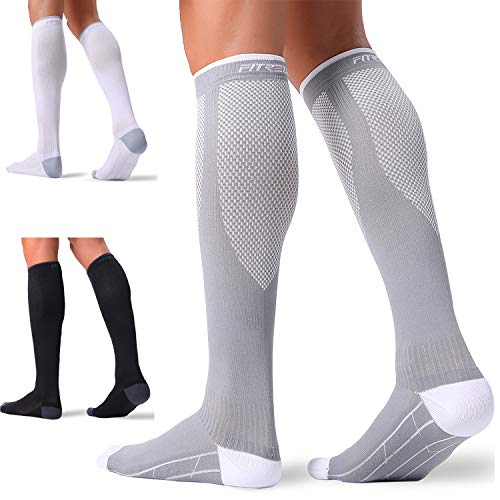
8.0/10FITRELL Compression Socks 20-30mmHg 3 Pairs
The practical way to own firm compression. Three pairs of 20-30 mmHg socks at this price solves the problem that single-pair medical hosiery creates: firm socks have to be washed often, they take a long time to dry, and one pair means a day without them. If you are back on your feet early — a toddler, stairs, a job you went back to sooner than you planned — this is the level and the quantity that matches. The reason it ranks below the single-pair firm picks is consistency: compression in a cheap three-pack is less uniform pair to pair and fades faster, and the knit is denser and warmer than the cotton-rich alternative. Still, a worn firm sock does more than an unworn one in the wash basket, and that is the trade this makes.
- Compression
- 20-30 mmHg
- Pack
- 3 pairs
- Height
- Knee high
- Use
- Heavier swelling, long days standing
What works
- Three pairs of firm compression for the price of one pair elsewhere
- 20-30 mmHg is the right band for heavier swelling
- Enough pairs to wear them every day without planning
- Good for long days standing as well as for swelling
What it gives up
- Compression varies pair to pair in a cheap multipack
- Dense knit runs hot indoors
- Hard to put on, like any firm sock
- Standard calf width only
Skip it ifyou need a wide calf or you are still struggling to bend after surgery — fit and ease matter more than the band here.
| Compression that matches the swelling | 9.0 |
|---|---|
| Gets on over a swollen foot | 6.0 |
| Comfortable for a whole day | 7.5 |
| Fits a calf that is still changing | 7.0 |
| Breathes while you are stuck sitting | 6.8 |
| Pairs per purchase | 9.0 |
#ad · affiliate link · price as of November 28, 2026
Questions people actually ask
How long does postpartum swelling last?
Usually one to two weeks, and it often peaks a few days after the birth rather than immediately. Fluid given during labor or a C-section can make the first few days worse.
If it is still significant after a couple of weeks, or if it is getting worse rather than better, mention it to your provider.
What compression level should I use after giving birth?
15-20 mmHg is the sensible default for moderate swelling: effective and still possible to put on yourself. Step up to 20-30 mmHg if that is not enough or you are on your feet for long stretches.
Firm compression above 20 mmHg is worth confirming with your provider, especially if you have any circulatory or diabetic history.
Can I wear compression socks at night?
Generally they are a daytime garment. Lying down removes the gravity problem they are designed to solve, so there is usually no benefit.
Follow your provider's instruction if you have been told otherwise after surgery, where overnight compression is sometimes specifically advised.
Are compression socks safe while breastfeeding?
Yes. They are a mechanical garment with no systemic effect, so breastfeeding makes no difference to whether you can wear them.
The practical issue is comfort while sitting for long feeds, which is an argument for a lighter, more breathable sock.
Should I wear compression socks after a C-section?
Often yes, and many hospitals put them on you before surgery. The difficulty is putting them on yourself afterward, when bending forward is uncomfortable.
A lighter band for the first week, help in the morning, or a sock donner all solve that. Follow any specific advice your surgical team gave you.
Why are my feet more swollen than they were when I was pregnant?
It is common. The fluid retained through pregnancy has to be cleared, intravenous fluid from labor adds to it, and sitting still to feed a newborn keeps it in your legs.
Elevation, gentle frequent movement and compression all help. Sudden or one-sided swelling, or swelling with calf pain, warmth or a headache, needs urgent medical advice instead.
Sources
- NHS. Swollen ankles, feet and fingers in pregnancy
- MedlinePlus, US National Library of Medicine. Varicose Veins
- American College of Obstetricians and Gynecologists. Postpartum Pain Management
- MedlinePlus, US National Library of Medicine. Postpartum Care
Who wrote this
Selena H.
Selena owns Bump & Bolster and researches and writes every page herself. She built the site around the problems pregnancy throws at you in the order they arrive: sleep first, then pain, then nothing fitting, then recovery.