Compression Socks for Flying While Pregnant
Research-backed guidance on grade, fit and timing for a flight, and the things that matter more than the socks.
| # | Pick | Best for | Score | Price |
|---|---|---|---|---|
| 1 |  Momcozy Medical Grade Compression Socks 20-30 mmHg20-30 mmHg, knee high | A long-haul flight | 9.0/10 | |
| 2 |  LEVSOX Cotton Compression Socks 20-30mmHg Knee High20-30 mmHg, cotton-rich, knee high | A long flight if synthetics make your feet hot | 8.7/10 | |
| 3 |  Momcozy Pregnancy Compression Socks 15-20mmHg Wide Calf15-20 mmHg, wide calf, knee high | A short flight, or a first pair | 8.5/10 | |
| 4 | 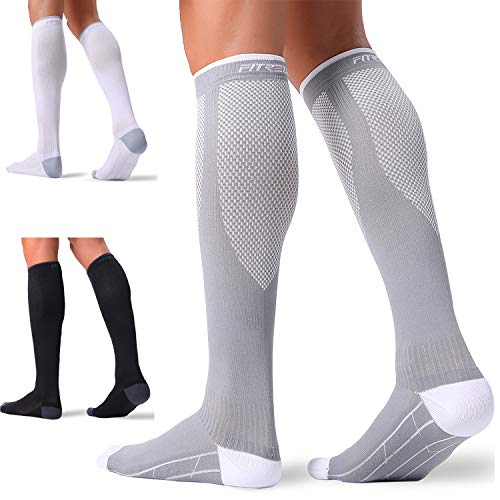 FITRELL Compression Socks 20-30mmHg 3 Pairs20-30 mmHg, three pairs | A trip with several flights in it | 8.2/10 |
Rows link to the full write-up below. Scores are ours, from published specs and what buyers consistently report — we have not worn these.
By Selena H. · Last reviewed: October 2026
As an Amazon Associate, we earn from qualifying purchases. We do not set prices: the figure in each button is Amazon’s own, as of the date shown, and Amazon is authoritative when you click. How this site is funded.
This is general information, not medical advice. Talk to your midwife, OB or GP about your own symptoms. Severe or sudden pain, bleeding, a fever, or regular contractions before 37 weeks need a call to your provider now — before you buy anything.
The short answer
Yes, wear them, and put them on before you leave for the airport rather than once you are in your seat. Pregnancy itself raises the risk of a blood clot in the leg, and sitting still for hours on a flight raises it again, so the two together are the reason travel guidance for pregnant passengers consistently recommends graduated compression stockings on long flights. Knee-high, 15-20 mmHg for a short flight and 20-30 mmHg for anything over about four hours. The socks are the easy part; moving every hour and drinking water matter at least as much.
Why flying is a different case from ordinary swelling
Swollen ankles at the end of a normal day in pregnancy are a nuisance. The reason compression on a plane is treated more seriously than that is a different mechanism entirely: pregnancy makes blood clot more readily, and immobility in a cramped seat slows the return of blood from the legs. Both effects point the same way, which is why venous thromboembolism in pregnancy is taken seriously and why graduated compression stockings are the standard recommendation for pregnant travelers on long flights.
That distinction matters for what you buy. For everyday swelling, the lightest compression you will actually wear is the right answer — our compression socks guide makes that case. For a long flight, the grade usually specified for travel is firmer. These are two different purchases, and buying the lighter pair for a long-haul flight is the common mistake.
Before any of the rest: if you have had a clot before, have a known clotting disorder, or have been told you are at higher risk, this page is not the advice you need. That is a conversation with your midwife or doctor before you book, because it may mean prescribed stockings or medication rather than socks off a shelf. Many airlines also restrict travel after about 36 weeks and may ask for a letter from 28 weeks, so check the airline's policy early.
What grade to wear
- Under about four hours: 15-20 mmHg. Enough to help venous return, light enough that you will get them on without a fight and keep them on.
- Over about four hours: 20-30 mmHg. The grade generally specified for travel stockings. If you have never worn compression before, buy them a week early and wear them around the house once, so flight day is not the first time.
- Knee high, not thigh high. Knee-high is easier to put on, easier to adjust in a cramped toilet, and far less likely to roll down at the band than a thigh-high stocking over a changing leg shape.
- Graduated, not uniform. The compression should be tightest at the ankle and ease going up. A sock that is equally tight all the way up, or tighter at the top, is working against you.
Fit, and the mistake nearly everyone makes
Compression socks are sized by ankle circumference and calf circumference, not by shoe size, and the calf is where pregnancy fit goes wrong. Calves swell as well as ankles, and a sock that is correct for your shoe size but too narrow at the calf will dig a band into your leg and do the opposite of what it is for. If you have any doubt, buy the wide-calf cut.
Measure in the morning, before any swelling has accumulated, and measure both legs — they are often different. If a sock leaves a deep mark, numbness or pins and needles, it is the wrong size, not a sock you need to break in.
The flight-day routine
- Put the socks on at home, first thing, before swelling starts. They are much easier to get on then, and the airport is more walking than you think.
- Book an aisle seat. This is not a comfort preference. The whole intervention depends on getting up, and a window seat means you will not.
- Get up and walk every hour that the seatbelt sign allows. Walking the aisle does more for venous return than any sock.
- Do ankle circles and calf raises in the seat between walks. Twenty of each, a few times a flight, pumps the calf muscle which is what moves blood back up the leg.
- Drink water steadily and skip the alcohol. Dehydration thickens blood and cabin air is dry. You will need the toilet, which is a feature here, not a bug.
- Keep the socks on until you have landed and moved around, not just until the wheels touch down.
What to watch for afterwards
Both legs swelling a bit after a flight is ordinary. One leg that is swollen, painful, red or warm — particularly in the calf — is not, and it needs same-day medical assessment, as does breathlessness or chest pain in the days after a flight. This is the one part of this page worth remembering more than the sock recommendation. Risk remains raised for some weeks after the birth too, so the same applies to a flight taken postpartum.
Separately, new or sudden swelling in the face and hands, a bad headache or visual changes are a reason to contact your maternity unit regardless of whether you have flown.
Long drives and long train journeys
Same mechanism, same answer, and people forget it because there is no cabin crew to remind them. A six-hour drive is a six-hour period of sitting still. Wear the socks, stop every couple of hours, and walk around for five minutes rather than just using the services.
Where the rest of this is covered
If your main problem is swollen feet rather than travel, our page on pregnancy swollen feet relief covers what helps day to day, and the full compression socks roundup compares grades, calf widths and multipacks. If you are packing for a long trip late in pregnancy, a support belt makes the airport walking noticeably easier, and the third trimester page covers what else changes in the last weeks.
Every pick, in detail
Scores below are ours. They come from the published specification sheets and from the patterns in what buyers consistently report — not from wearing these ourselves.
Top pick · A long-haul flight
9.0/10Momcozy Medical Grade Compression Socks 20-30 mmHg
For a flight of four hours or more, the firmer grade is the one worth having, and 20-30 mmHg is the range that graduated compression stockings for travel are usually specified at. Knee high is the right height for a plane - thigh-high stockings are harder to get on in an aircraft toilet and more likely to roll down at the band.
- Compression
- 20-30 mmHg
- Grade
- Marketed as medical grade, FDA registered
- Height
- Knee high
- Use
- Flying, long shifts, heavier swelling
What works
- Firmer grade suited to a long flight rather than everyday swelling
- Knee high, which is the practical height on a plane
- Graduated compression, tightest at the ankle as it should be
What it gives up
- Firm enough to be genuinely hard to put on late in pregnancy
- Can be too much if you have not worn compression before
- Synthetic knit runs warm on a hot aircraft
Skip it ifyou have never worn compression socks - start lighter at home first.
#ad · affiliate link · price as of November 28, 2026
Pick 2 · A long flight if synthetics make your feet hot
8.7/10LEVSOX Cotton Compression Socks 20-30mmHg Knee High
Same grade, cotton-rich fabric. On a warm aircraft over ten hours that difference is noticeable, and feet that are too hot are feet whose socks come off halfway through the flight - which defeats the purpose entirely. The trade is that cotton is slower to dry and loses its shape sooner.
- Compression
- 20-30 mmHg
- Fabric
- Cotton-rich
- Height
- Knee high
- Use
- Nursing shifts, travel, pregnancy
What works
- Cotton-rich fabric is cooler than synthetic compression on a long flight
- Same 20-30 mmHg grade as the synthetic versions
- Knee high with a band that holds without digging
What it gives up
- Slower to dry, which matters on a multi-leg trip
- Loses shape sooner than synthetic knits
- Still firm and awkward to put on at 34 weeks
Skip it ifyou need something you can wash and re-wear overnight.
#ad · affiliate link · price as of November 28, 2026
Pick 3 · A short flight, or a first pair
8.5/10Momcozy Pregnancy Compression Socks 15-20mmHg Wide Calf
For a flight under about four hours, or if you have never worn compression, 15-20 mmHg is the sensible grade - enough to help with venous return without being a wrestling match to get on. The wide-calf cut is the other reason it is here: calves swell in pregnancy and a standard calf width is the most common fit failure.
- Compression
- 15-20 mmHg
- Calf
- Wide-calf cut
- Height
- Knee high
- Toe
- Closed
What works
- Lighter grade is far easier to get on without help
- Wide-calf cut fits a calf that has already changed shape
- Enough compression for a short flight or a long drive
What it gives up
- Lighter than the usual travel specification for long-haul
- Wide calf is loose on a slim leg
- Knee band can still mark the leg after many hours
Skip it ifyou are flying long-haul and have worn compression before.
#ad · affiliate link · price as of November 28, 2026
Pick 4 · A trip with several flights in it
8.2/10FITRELL Compression Socks 20-30mmHg 3 Pairs
A multi-leg trip or a holiday with a return flight means you need a clean pair for each flight, and compression socks are not something you want to wash in a hotel sink and wear damp. Three pairs at the travel grade is the practical way to cover a round trip plus the long days in between.
- Compression
- 20-30 mmHg
- Pack
- 3 pairs
- Height
- Knee high
- Use
- Heavier swelling, long days standing
What works
- Three pairs covers an outbound, a return and a spare
- Travel-grade 20-30 mmHg in each pair
- Cheap enough per pair to treat as trip consumables
What it gives up
- Standard calf width, so no help if your calves have swollen
- Synthetic knit runs warm
- Compression is less consistent pair to pair than the premium brands
Skip it ifyou only have one flight and want the best single pair.
#ad · affiliate link · price as of November 28, 2026
Questions people actually ask
Should I wear compression socks on a flight while pregnant?
On a long flight, yes. Pregnancy raises the tendency of blood to clot and sitting still for hours slows the return of blood from the legs, so travel guidance for pregnant passengers commonly recommends graduated compression stockings for long journeys.
If you have had a clot before, have a known clotting disorder, or have been told you are at higher risk, speak to your midwife or doctor before you travel rather than relying on socks bought off a shelf.
What mmHg compression socks should I wear for flying when pregnant?
15-20 mmHg is reasonable for a flight under about four hours. For anything longer, 20-30 mmHg is the grade usually specified for travel stockings.
Choose knee-high rather than thigh-high, and make sure the compression is graduated - tightest at the ankle, easing upward. A sock that is equally tight all the way up is working against you.
When should I put compression socks on before a flight?
At home, first thing, before you leave for the airport. They go on far more easily before any swelling has accumulated, and the airport itself involves more standing and walking than most people plan for.
Keep them on until you have landed and moved around, not just until the plane touches down.
What size compression socks do I need while pregnant?
They are sized by ankle and calf circumference, not shoe size. Measure both legs in the morning before swelling starts, because the two are often different.
The calf is where pregnancy fit usually fails, since calves swell as well as ankles. If you are between widths, buy the wide-calf cut - a band digging into the calf does the opposite of what compression is for.
Is it safe to fly while pregnant?
For most uncomplicated pregnancies, flying is generally considered safe, but airlines set their own rules: many restrict travel after about 36 weeks and may ask for a letter from your midwife or doctor from around 28 weeks. Check the airline's policy before booking.
If your pregnancy has any complications, or you have a history of clots, discuss the trip with your maternity team first. That conversation is more useful than any product decision.
What are the warning signs after a flight when pregnant?
One leg that is swollen, painful, red or warm - particularly in the calf - needs same-day medical assessment. So does breathlessness or chest pain in the days after a flight.
Both legs swelling a little is ordinary. The asymmetry is what matters. Raised clot risk continues for some weeks after the birth, so the same applies to travel postpartum.
Sources
- MedlinePlus, US National Library of Medicine. Varicose Veins
- NHS. Swollen ankles, feet and fingers in pregnancy
- MedlinePlus, US National Library of Medicine. Common symptoms during pregnancy
Who wrote this
Selena H.
Selena owns Bump & Bolster and researches and writes every page herself. She built the site around the problems pregnancy throws at you in the order they arrive: sleep first, then pain, then nothing fitting, then recovery.