Best Nursing Pads for Leaking Milk
Research-backed picks for the first months of feeding, ranked on the three things that decide whether a nursing pad works: how much it holds, whether your skin stays dry, and whether anyone can see it.
| # | Pick | Best for | Score | Price |
|---|---|---|---|---|
| 1 |  Lansinoh Stay Dry Disposable Nursing Pads 100 CountDisposable, quilted stay-dry liner, 100 to a box | The default pick, and the one to buy before the baby arrives | 9.1/10 | |
| 2 | 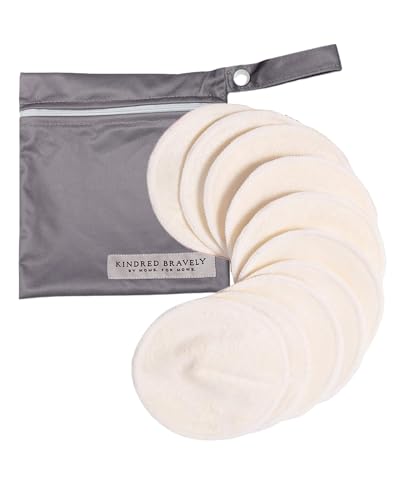 Kindred Bravely Organic Reusable Nursing Pads 10 PackWashable, contoured, waterproof backing, 10 to a pack | The best washable set, and the cheapest route over a year | 8.9/10 | |
| 3 |  Bamboobies Reusable Overnight Nursing Pads 4 CountWashable with a thicker overnight core, velour face, two pairs | Overnight, which is when the real leaking happens | 8.7/10 | |
| 4 |  Momcozy Ultra-Thin Disposable Nursing Pads 60 CountUltra-thin disposable, individually wrapped, 60 to a box | The budget pick, and the thinnest option under fitted clothes | 8.5/10 | |
| 5 |  KeaBabies Disposable Nursing Pads 120 CountDisposable with a leak-proof backing, 120 to a box | Volume buying for the first six weeks | 8.3/10 |
Rows link to the full write-up below. Scores are ours, from published specs and what buyers consistently report — we have not worn these.
By Selena H. · Last reviewed: November 2026
As an Amazon Associate, we earn from qualifying purchases. We do not set prices: the figure in each button is Amazon’s own, as of the date shown, and Amazon is authoritative when you click. How this site is funded.
The short answer
Buy disposables with a stay-dry liner for the first six weeks, when you are leaking most and your skin is most fragile, then switch to a washable set once supply settles. Buy a separate, thicker pad for nights. The spec that matters is not how much a pad absorbs but whether your skin stays dry once it has: wet skin is what cracks. If you only buy one thing before the birth, buy a box of stay-dry disposables and keep them in the hospital bag.
Why leaking is worse than anyone warns you
For the first few weeks of feeding, your supply has not worked out how much milk is needed, so it makes more than enough. The practical result is that you leak — in bed, at the supermarket, through a shirt in the middle of a conversation, and reliably from one side while you feed on the other, because a let-down fires on both sides at once. It settles. Most people find the leaking drops sharply somewhere between six weeks and three months as supply regulates, and some never leak much at all. But the early weeks are the leakiest, they coincide exactly with the weeks your nipples are most likely to be sore, and those two facts are connected.
The connection is the reason this page ranks pads on dryness rather than on absorbency. Skin that stays wet softens and breaks down, and nipple skin is doing a hard job already in the first fortnight. A pad that holds milk against you is working against your healing, which is why a plain cotton round of fabric — or a pad left in place for hours after a feed — is a worse idea than it looks. Change pads when they are wet rather than when they are full, and the soreness picture improves noticeably.
If your nipples are already cracked or bleeding, pads are a comfort measure rather than a treatment, and a painful latch is worth getting looked at rather than padded around. Persistent pain, a sudden localized ache with a fever, or a hard red patch are reasons to contact a midwife, health visitor or lactation consultant the same day. Our postpartum recovery timeline sets out what is normal in which week.
How we picked
The criteria came before the products. A pad earns a place here if it keeps the skin dry rather than only keeping the shirt dry; if it holds a real let-down rather than a trickle; if it disappears under a bra and a top; if it stays where you put it instead of migrating; if it is kind to skin that may already be cracked; and if the cost over months of feeding is defensible. Those six axes are why a cheap washable set and a premium disposable can both score well — they are good at different things, and most people end up owning both.
Every product was confirmed against a live listing, so nothing here is discontinued or invented, and the specifications are read off those listings rather than measured by us. We have not used any of them. Nursing pads are also a genuinely commoditized category at the thin-disposable end, and we say so on the picks where it is true rather than inventing a difference. Our full method is on how we pick.
Disposable or washable
This is the only real decision, and the honest answer is that the two suit different stages rather than different people.
Disposables win the first six weeks
They are thinner, they hold more for their thickness, and — decisively — a good one has a stay-dry topsheet that leaves your skin dry rather than merely your clothes. In the weeks when volume is highest and skin is most fragile, that is the right specification. They are also the only sensible option for the hospital bag and for the first week home, when laundry is not something you are going to keep on top of.
Washables win everything after that
Once supply settles and you are using two or three pads a day instead of eight, the arithmetic flips completely: a pack of washables bought once replaces boxes bought every fortnight for however many months you keep feeding. They are softer, they produce no waste, and a contoured set with a waterproof backing performs perfectly well for a settled supply. What they are not is dry — fabric holds moisture against you, which is why they are the wrong choice while skin is healing.
Most people should own both
A box of disposables for nights, for going out and for the early weeks, and a washable set for ordinary days. Buying one of each is cheaper over six months than committing to either, and it means the pad you reach for is the right one for the situation rather than the only one you own.
The mistakes that cause most of the trouble
Leaving a wet pad in. The most common and the most consequential. Change on wetness, not on volume. A pad that has done its job is a pad holding milk against skin you need to heal.
Using a flat round of fabric. Cutting up a muslin or using a plain cotton disc feels thrifty and performs badly: no waterproof layer means the leak just passes through to your top, and cotton against wet skin is the exact situation to avoid.
Buying one thin box before the birth. Early-weeks consumption is six to eight pads a day, which empties a 60-count box in a week. Buy a large box or buy two.
Expecting a day pad to survive the night. Six hours of accumulation and a let-down you sleep through needs a thicker pad. This is the single most common reason people conclude that nursing pads do not work.
Wearing the wrong bra. A pad only stays in place inside a cup that fits. A loose or stretched-out bra lets a pad slide, crease and leak around the edge regardless of how good the pad is — which is a bra problem rather than a pad problem. Our nursing bra roundup and sizing guide cover that properly, and a sleep bra is what holds an overnight pad in place.
What nursing pads are not for
Two products get confused with nursing pads and neither of them is one. Hydrogel or cooling gel pads — the reusable discs sold for sore nipples — are a soothing dressing, not an absorbent pad; they do nothing about leaking and should not be worn as if they did. Silicone or breast-shell style collectors are for catching and saving milk, which is a different goal again.
Nursing pads also will not fix a feeding problem. If you are soaking through pads constantly past the first couple of months, leaking heavily from one side only, or in pain with every feed, those are worth raising with a midwife, health visitor or lactation consultant. A pad manages a symptom and a good latch fixes the cause.
If the skin is already sore or cracked, the pad is only half the answer — what you put on the skin between feeds is the other half. Our best nipple creams page covers the lanolin and plant-based options and which one suits skin that has actually split rather than skin that is merely tender.
How many you actually need
For disposables in the first six weeks, plan on six to eight a day and buy in boxes of a hundred or more rather than sixty. For washables, ten pads — five pairs — is the number that makes a daily wash work without ever being caught short; fourteen gives you two or three days of slack, which is worth having in the weeks when laundry slips. Two pairs is enough only for overnight use, because you need them once a day rather than six times.
And buy them before the birth. Pads are on almost every hospital bag list for a reason: the milk arrives on day two or three, usually while you are still adjusting to everything else, and that is a bad moment to be ordering anything. A box in the bag and a box at home is the right amount of preparation. Our guide to when to buy nursing kit covers the timing of the rest of it.
If you have decided on washable pads, our best reusable nursing pads page ranks that half of the category on its own — including the detail that decides whether reusables work for you, which is owning enough of them.
Every pick, in detail
Scores below are ours. They come from the published specification sheets and from the patterns in what buyers consistently report — not from wearing these ourselves.
Top pick · The default pick, and the one to buy before the baby arrives
9.1/10Lansinoh Stay Dry Disposable Nursing Pads 100 Count
The pad to buy if you buy one thing, and the reason is the liner rather than the absorbency. Cheap disposable pads soak up milk and then hold it against you, which is the mechanism behind most of the soreness people blame on feeding itself: nipple skin that stays wet gets macerated, and macerated skin cracks. A quilted stay-dry topsheet moves the milk down into the core and leaves the surface dry, which is the single most useful thing a nursing pad does. These are contoured rather than flat, so they cup instead of creasing into a ridge inside the bra, and the two adhesive tabs actually hold. They are stocked almost everywhere, which matters when you run out at 11pm in week two. The downsides are the ones every disposable has.
- Type
- Disposable
- Pack
- 100 count (also sold in 36 and 200)
- Construction
- Quilted stay-dry liner over an absorbent core
- Fit
- Contoured with a two-tab adhesive back
What works
- Stay-dry liner keeps the skin dry, not just the shirt
- Contoured shape cups instead of folding into a ridge
- Two adhesive tabs, so it does not travel inside the bra
- Stocked in supermarkets and pharmacies, so running out is recoverable
What it gives up
- A box every week or two adds up over months of feeding
- Visible edge under a thin or fitted top
- Plastic backing does not breathe, which some skin dislikes
- Pure waste volume, which is the honest objection to all disposables
Skip it ifyou already know you want to avoid disposables entirely — go straight to the washable picks below.
| Keeps skin dry, not just the shirt | 9.5 |
|---|---|
| Holds a real let-down | 8.8 |
| Invisible under a bra and a top | 7.5 |
| Stays where you put it | 9.3 |
| Kind to cracked or sore skin | 8.8 |
| Cost per day of use | 7.0 |
#ad · affiliate link · price as of November 28, 2026
Pick 2 · The best washable set, and the cheapest route over a year
8.9/10Kindred Bravely Organic Reusable Nursing Pads 10 Pack
The washable pick worth buying first, and if you are feeding for months rather than weeks it is the better financial decision by a wide margin. Ten pads is five pairs, which with a daily wash is enough to never be caught short. Two details separate a good washable pad from a frustrating one, and this set has both: a contoured cut, so it curves rather than buckling into a flat disc inside the bra, and a waterproof backing layer, without which a reusable pad simply moves the leak from your skin to your shirt. The honest limits of every washable pad apply. They are thicker than a disposable, they take a full day to air dry, and once soaked they stay damp against you until you change them.
- Type
- Washable and reusable
- Pack
- 10 pads (5 pairs) plus a carrying bag
- Backing
- Waterproof
- Shape
- Contoured
What works
- Contoured cut, so it curves with the bra instead of buckling flat
- Waterproof backing, which is what stops the leak reaching your top
- Ten pads, enough to rotate through a daily wash
- Carrying bag included, which is the thing you need out of the house
What it gives up
- Thicker than a disposable and visible under a fitted top
- Air dries slowly; a tumble dryer shortens their life
- Holds moisture against the skin once soaked through
- Higher up-front cost than a box of disposables
Skip it ifyou have cracked or very sore nipples right now — a stay-dry disposable is kinder until the skin heals.
| Keeps skin dry, not just the shirt | 7.3 |
|---|---|
| Holds a real let-down | 8.5 |
| Invisible under a bra and a top | 7.0 |
| Stays where you put it | 8.5 |
| Kind to cracked or sore skin | 7.5 |
| Cost per day of use | 9.8 |
#ad · affiliate link · price as of November 28, 2026
Pick 3 · Overnight, which is when the real leaking happens
8.7/10Bamboobies Reusable Overnight Nursing Pads 4 Count
Night leaking is a different problem from day leaking and deserves a different pad, which is the whole argument for this one. Going six or seven hours between feeds means a long stretch of accumulating milk and a let-down that happens while you are asleep and cannot respond to it; a day-weight pad is simply not enough volume and you wake up wet through to the sheet. These have a deliberately thicker core for that, and a soft velour face rather than the microfiber most washables use, which is noticeably more tolerable against sore skin at four in the morning. Two pairs is the right quantity because you only need them at night. The thickness that makes them work overnight makes them obvious under a daytime top.
- Type
- Washable and reusable
- Pack
- 4 pads (2 pairs)
- Core
- Thicker overnight core
- Face
- Velour, heart-shaped cut
What works
- Thicker core sized for a night's accumulation, not an hour's
- Velour face is softer against sore skin than microfiber
- Heart-shaped cut tucks into the bra without a visible circle
- Washable, so the per-night cost over months is negligible
What it gives up
- Too thick to be discreet under a fitted daytime top
- Only two pairs, so you are washing every other day
- Velour pills and loses softness after a few months
- Slow to dry, which with two pairs is a real constraint
Skip it ifyou need pads for the day — buy a thinner set for daytime and keep these for nights.
| Keeps skin dry, not just the shirt | 7.5 |
|---|---|
| Holds a real let-down | 9.5 |
| Invisible under a bra and a top | 5.8 |
| Stays where you put it | 8.3 |
| Kind to cracked or sore skin | 9.0 |
| Cost per day of use | 9.3 |
#ad · affiliate link · price as of November 28, 2026
Pick 4 · The budget pick, and the thinnest option under fitted clothes
8.5/10Momcozy Ultra-Thin Disposable Nursing Pads 60 Count
The budget pick on this page and the one to buy if what you mind most is being able to see the pad. Ultra-thin disposables use a thinner absorbent core and a flatter profile, which trades some capacity for genuinely disappearing under a T-shirt — and for going back to work, or for the first time you want to wear something fitted, that trade is the right one. Individually wrapped is not a marketing detail here: it is what makes a pad you can keep in a coat pocket, a changing bag and a desk drawer without it coming out gray. The capacity limit is real and you should plan around it rather than be surprised by it: in the engorged early weeks, or with a strong let-down, a thin pad will reach its limit.
- Type
- Disposable
- Pack
- 60 count
- Profile
- Ultra-thin, individually wrapped
- Fit
- Contoured, adhesive back
What works
- Genuinely thin — the most discreet option here under fitted clothes
- Individually wrapped, so a spare lives in every bag and pocket
- The cheapest per-box option on this page
- Breathable topsheet rather than a plastic film
What it gives up
- Lower capacity than a standard disposable — not for the engorged first weeks
- 60 to a box goes quickly at six or eight pads a day
- Thin pads shift inside a loose bra more than contoured ones
- Not an overnight pad under any circumstances
Skip it ifyou are in the first fortnight or have a forceful let-down — buy capacity now and thinness later.
| Keeps skin dry, not just the shirt | 8.5 |
|---|---|
| Holds a real let-down | 6.5 |
| Invisible under a bra and a top | 9.5 |
| Stays where you put it | 7.8 |
| Kind to cracked or sore skin | 8.3 |
| Cost per day of use | 8.3 |
#ad · affiliate link · price as of November 28, 2026
Pick 5 · Volume buying for the first six weeks
8.3/10KeaBabies Disposable Nursing Pads 120 Count
The sensible bulk buy for the period when you genuinely are going through six to eight pads a day. The early weeks are the leakiest by a distance — supply is still regulating, let-downs fire on the other side while you feed, and the volume is simply higher than it will be in two months — and the mistake people make is buying a small box, running out, and spending that fortnight topping up at convenience-store prices. 120 individually wrapped pads with a stay-dry topsheet and a leak-proof back covers that window. They are a touch bulkier than the thinnest options and the adhesive is less tenacious than the best here, which is the trade for the count.
- Type
- Disposable
- Pack
- 120 count
- Construction
- Stay-dry topsheet, leak-proof backing
- Packaging
- Individually wrapped, BPA-free
What works
- 120 to a box, which actually matches early-weeks consumption
- Stay-dry topsheet over a leak-proof backing
- Individually wrapped for bags and pockets
- Good cost per pad for a disposable
What it gives up
- Bulkier than the ultra-thin options under a fitted top
- Adhesive is less tenacious than the best disposables here
- Large box to store in a house already full of boxes
- Still disposable, with the waste that implies
Skip it ifyou are past the first couple of months — by then you need far fewer pads and can buy thinner ones.
| Keeps skin dry, not just the shirt | 8.8 |
|---|---|
| Holds a real let-down | 8.5 |
| Invisible under a bra and a top | 7.0 |
| Stays where you put it | 7.8 |
| Kind to cracked or sore skin | 8.3 |
| Cost per day of use | 8.0 |
#ad · affiliate link · price as of November 28, 2026
Pick 6 · A washable set from the brand that knows the category
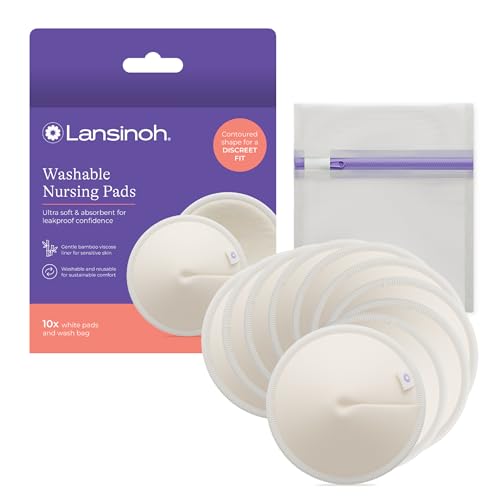
8.1/10Lansinoh Washable Nursing Pads Organic Bamboo Viscose 10 Count
The washable set from the name most associated with nursing pads, and the material is the point. Bamboo viscose is softer and cooler against skin than microfiber or cotton terry, which matters when the pad is in contact with sore skin for most of the day, and it absorbs well for its thickness. The included wash bag is the detail that makes a reusable system survive a real laundry pile rather than losing half the pads in the drum. Where it sits behind the top washable pick is the shape: these are less deeply contoured, so they are more prone to lying flat and creasing inside a cup. And all washables share the same core problem — once wet, the moisture stays against you until you change them.
- Type
- Washable and reusable
- Material
- Organic bamboo viscose
- Pack
- 10 pads plus a wash bag
- Colors
- Natural and black listed
What works
- Bamboo viscose is softer and cooler than microfiber or terry
- Wash bag included, which keeps the set together through the laundry
- Ten pads, so a daily wash cycle works
- From the brand with the longest track record in the category
What it gives up
- Less deeply contoured, so it can crease flat inside the cup
- Viscose needs gentler washing and air drying
- Holds moisture against the skin once soaked
- Sold in several pack configurations, so read which one you are ordering
Skip it ifyou want the most discreet pad you can get — any washable is thicker than a thin disposable.
| Keeps skin dry, not just the shirt | 7.3 |
|---|---|
| Holds a real let-down | 8.3 |
| Invisible under a bra and a top | 6.8 |
| Stays where you put it | 7.5 |
| Kind to cracked or sore skin | 8.8 |
| Cost per day of use | 9.5 |
#ad · affiliate link · price as of November 28, 2026
Pick 7 · Sensitive, cracked or already-sore skin
8.0/10PureTree Organic Cotton Disposable Nursing Pads 100 Count
The disposable to reach for when your skin is the problem rather than the volume. Most disposable pads use a polypropylene topsheet, which is good at wicking and not especially kind to skin that is already cracked; an organic cotton face is softer against that and, for the small number of people who react to synthetic topsheets, removes the suspect material entirely. The first fortnight of feeding is when nipple damage is most common and most miserable, and anything that reduces friction on broken skin earns its place. It is the most expensive disposable here, and cotton holds a little more moisture at the surface than a dedicated stay-dry liner does, which is the trade you are making deliberately.
- Type
- Disposable
- Topsheet
- Organic cotton
- Pack
- 100 pads per box
- Use
- Sensitive or cracked skin
What works
- Organic cotton topsheet, softer on cracked skin than synthetic
- Removes the synthetic topsheet entirely if you react to it
- 100 to a box, so it covers a real stretch
- A sensible companion to a nipple balm in the first fortnight
What it gives up
- The most expensive disposable on this page
- Cotton holds more moisture at the surface than a stay-dry liner
- Less widely stocked, so emergency top-ups are harder
- Thicker than the ultra-thin options
Skip it ifyour skin is fine and you want the cheapest effective pad — the stay-dry and ultra-thin picks are better value.
| Keeps skin dry, not just the shirt | 7.5 |
|---|---|
| Holds a real let-down | 8.3 |
| Invisible under a bra and a top | 7.0 |
| Stays where you put it | 7.8 |
| Kind to cracked or sore skin | 9.5 |
| Cost per day of use | 6.5 |

#ad · affiliate link · price as of November 28, 2026
Pick 8 · Anyone whose washable pads keep sliding out of position
7.9/10Momcozy Reusable Nursing Pads 3D Pleated 10 Count
The washable set that addresses the specific irritation of reusable pads, which is that flat discs of fabric slide. A 3D pleated construction gives the pad a built-in curve so it sits in the cup rather than against it, and the textured face grips instead of skating across skin — which sounds minor until you have fished a pad out of your waistband in a meeting. The two bags, one for washing and one wet bag for carrying a used pair home, is the correct kit for using washables away from the house, and the thing most sets leave out. It is thicker than the contoured sets above and the pleating is visible through a thin top, which is the cost of the shape.
- Type
- Washable and reusable
- Pack
- 10 pads plus wash and wet bags
- Shape
- 3D pleated, no-slip face
- Feel
- Dry-feel topsheet
What works
- 3D pleating holds a cup shape instead of lying flat
- Textured face grips rather than sliding on skin
- Includes a wet bag for used pads away from home
- Dry-feel topsheet, better than plain terry for staying dry
What it gives up
- Pleating is visible through a thin or fitted top
- Thicker than the contoured washable sets
- Textured face traps lint in the wash
- Dry-feel finish softens with repeated washing
Skip it ifyou wear fitted tops daily — the pleated profile shows.
| Keeps skin dry, not just the shirt | 7.8 |
|---|---|
| Holds a real let-down | 8.0 |
| Invisible under a bra and a top | 5.8 |
| Stays where you put it | 9.0 |
| Kind to cracked or sore skin | 7.8 |
| Cost per day of use | 9.5 |

#ad · affiliate link · price as of November 28, 2026
Pick 9 · A middle ground between capacity and thinness
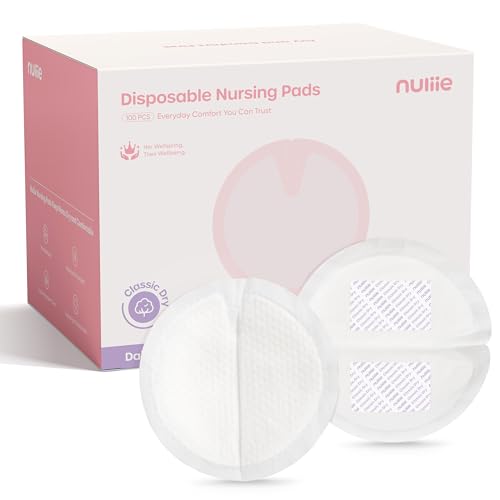
7.8/10Nuliie Featherlight Disposable Nursing Pads 100 Count
A reasonable middle option, and worth knowing about if the stay-dry pads feel bulky and the ultra-thin ones run out of capacity on you. These sit between the two: a slim profile with a breathable topsheet and a leak-proof back, individually wrapped, at a hundred to a box. The useful thing about this part of the market is that it is genuinely commoditized — a slim disposable with a stay-dry face and a leak-proof back is a solved product, and the differences between brands here are packaging, count and price rather than performance. Buy on cost per pad. What you should not expect is overnight capacity or the tenacious adhesive of the best-engineered pads.
- Type
- Disposable
- Pack
- 100 count
- Profile
- Featherlight, breathable topsheet
- Packaging
- Individually wrapped
What works
- Slim without being as low-capacity as the ultra-thin pads
- Breathable topsheet over a leak-proof backing
- Individually wrapped, 100 to a box
- Competitive cost per pad
What it gives up
- Not an overnight pad
- Adhesive is less secure than the best disposables here
- Less widely stocked than the supermarket brands
- Nothing distinguishes it beyond price and count
Skip it ifyou want the single best stay-dry performance — that is the top pick, and the gap is in the liner.
| Keeps skin dry, not just the shirt | 8.0 |
|---|---|
| Holds a real let-down | 7.5 |
| Invisible under a bra and a top | 8.3 |
| Stays where you put it | 7.3 |
| Kind to cracked or sore skin | 8.0 |
| Cost per day of use | 8.3 |
#ad · affiliate link · price as of November 28, 2026
Pick 10 · The cheapest way into washable pads
7.6/10wegreeco Washable Reusable Nursing Breast Pads 14 Pack
The cheapest route into reusables and the largest count here, which together make it the sensible way to find out whether washable pads suit you before committing to a better set. Fourteen pads is seven pairs, enough to go two or three days between washes, and both bags are included. What you are giving up is construction: these are multi-layer discs rather than deeply contoured cups, so they lie flatter in the bra and crease more, and the absorbent core is thinner than the premium washables. For a daytime pad on a settled supply at four months, that is perfectly adequate. For the engorged early weeks, or overnight, it is not enough pad.
- Type
- Washable and reusable
- Pack
- 14 pads plus laundry and travel bags
- Diameter
- 4.7 in listed option
- Layers
- Multi-layer absorbent core
What works
- Fourteen pads, the highest count of any washable set here
- Laundry bag and travel bag both included
- The lowest-cost way to try reusables at all
- Thinner layers dry faster than the thick overnight pads
What it gives up
- Flat discs rather than contoured cups, so they crease in the bra
- Thinner core than the premium washables — not an overnight pad
- Absorbency drops noticeably after months of washing
- Sized and named by option, so read the listing carefully
Skip it ifyou are in the first few weeks of feeding — buy capacity first and economize later.
| Keeps skin dry, not just the shirt | 6.8 |
|---|---|
| Holds a real let-down | 7.0 |
| Invisible under a bra and a top | 7.0 |
| Stays where you put it | 6.8 |
| Kind to cracked or sore skin | 7.5 |
| Cost per day of use | 9.8 |

#ad · affiliate link · price as of November 28, 2026
Pick 11 · A straightforward disposable from an established feeding brand
7.5/10Dr. Brown's Disposable Breast Pads 60 Count
A plain, competent disposable from a brand most people already have something from, and it is on this page as the no-decision option rather than the best one. Quilted cover, absorbent core, contoured shape, adhesive back: everything a disposable nursing pad needs and nothing it does not. The reason it ranks where it does is simply that the stay-dry liner on the top pick is a genuinely better piece of engineering, and 60 to a box is a small count for the weeks when you need pads most. If you are already buying bottles or a pump from the same brand and want to add pads to the order without thinking about it, this is a perfectly good pad and you will not regret it.
- Type
- Disposable
- Pack
- 60 count
- Construction
- Absorbent core with a quilted cover
- Fit
- Contoured, adhesive back
What works
- Straightforward, competent disposable with no weak point
- Contoured with an adhesive back, so it stays in the cup
- Established feeding brand, widely stocked
- Easy to add to an existing order of feeding kit
What it gives up
- 60 to a box is a small count for the early weeks
- Surface stays wetter than a dedicated stay-dry liner
- No individual wrapping on all pack formats
- Costs more per pad than the bulk boxes here
Skip it ifyour skin is already sore — a stay-dry or organic cotton face will treat it better.
| Keeps skin dry, not just the shirt | 7.8 |
|---|---|
| Holds a real let-down | 8.0 |
| Invisible under a bra and a top | 7.3 |
| Stays where you put it | 8.3 |
| Kind to cracked or sore skin | 7.8 |
| Cost per day of use | 7.0 |

#ad · affiliate link · price as of November 28, 2026
Questions people actually ask
Do I really need nursing pads?
Most people do for at least the first few weeks, because supply overshoots before it regulates and leaking is the result. Some people barely leak at all and stop using them quickly.
Buy one box before the birth rather than a large stock. You will know within a few days of your milk coming in how much you need.
Disposable or reusable nursing pads?
Disposables for the first six weeks: they are thinner, hold more for their thickness, and a good one keeps your skin dry rather than just your clothes, which matters while nipple skin is fragile.
Washables once supply settles, because the cost over months of feeding is far lower. Most people end up owning both and using disposables at night and when going out.
How often should I change nursing pads?
Whenever the pad is wet, not when it is full. Milk held against the skin softens it and contributes to cracking, which is the opposite of what you want in the early weeks.
In practice that is six to eight pads a day in the first fortnight, dropping to two or three a day once leaking settles.
How long will I leak for?
Most people find leaking drops sharply somewhere between six weeks and three months as supply regulates to what the baby actually takes. Some leak for longer and some hardly leak at all.
Leaking from the other side while feeding is normal throughout, because a let-down happens on both sides at once.
Can I see nursing pads under my clothes?
Thin disposables are essentially invisible under most tops. Thicker overnight pads and most washable sets show a circle or an edge under anything fitted.
If that matters for work, buy an ultra-thin disposable for the office and keep the thicker pads for nights and weekends. A well-fitting bra does more for the look than the pad choice does.
Will nursing pads help with sore or cracked nipples?
Indirectly. A pad with a stay-dry liner keeps the skin drier, and drier skin heals better than skin kept wet, so the choice of pad genuinely matters while you are sore.
They are not a treatment. Persistent pain with feeding is usually a latch issue and worth having looked at by a midwife, health visitor or lactation consultant. Pain with a fever or a hard red patch needs contacting the same day.
How do I wash reusable nursing pads?
Rinse in cool water first, then wash in the machine in the bag the set comes with, on a normal cycle. Air drying is kinder than a tumble dryer and makes them last a lot longer.
Avoid fabric softener, which coats the fibers and reduces how much they absorb. Expect absorbency to fall gradually over months of washing.
Are cooling gel pads the same as nursing pads?
No. Hydrogel or cooling gel pads are a soothing dressing for sore nipples and absorb nothing, so wearing them for leaking does not work.
They sit alongside nursing pads rather than replacing them: a gel pad between feeds if you are sore, an absorbent pad in the bra the rest of the time.
Sources
- NHS Start for Life. Breastfeeding your baby
- MedlinePlus, US National Library of Medicine. Breastfeeding
- American College of Obstetricians and Gynecologists. Breastfeeding Your Baby
- MedlinePlus, US National Library of Medicine. Postpartum Care
Who wrote this
Selena H.
Selena owns Bump & Bolster and researches and writes every page herself. She built the site around the problems pregnancy throws at you in the order they arrive: sleep first, then pain, then nothing fitting, then recovery.