Best Reusable Nursing Pads
Research-backed picks for washable breast pads, ranked on absorbency, whether they stay dry against the skin, and whether they disappear under a bra.
| # | Pick | Best for | Score | Price |
|---|---|---|---|---|
| 1 | 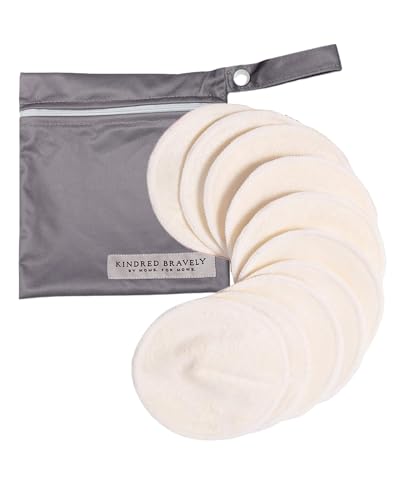 Kindred Bravely Organic Reusable Nursing Pads 10 PackOrganic, contoured, waterproof-backed, 10 pads plus a bag | The default pick: a contoured pad with a leak barrier | 9.1/10 | |
| 2 |  wegreeco Washable Reusable Nursing Breast Pads 14 Pack14 pads with laundry and travel bags, multi-layer core | The budget pick: the most pads for the least money | 8.9/10 | |
| 3 |  Momcozy Reusable Nursing Pads 3D Pleated 10 Count3D pleated with a dry-feel topsheet and a no-slip face | Staying dry against the skin between changes | 8.7/10 | |
| 4 | 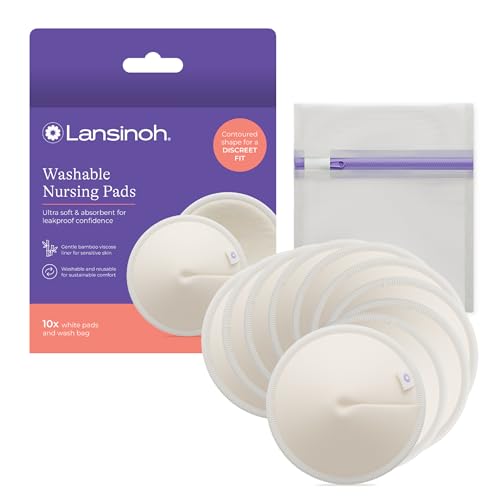 Lansinoh Washable Nursing Pads Organic Bamboo Viscose 10 CountOrganic bamboo viscose, 10 pads plus a wash bag | Soft fabric from a brand that only makes feeding kit | 8.5/10 | |
| 5 |  Bamboobies Reusable Overnight Nursing Pads 4 CountThicker overnight core, velour face, heart-shaped cut, 4 pads | Overnight, when the leak is heaviest and you are asleep | 8.3/10 |
Rows link to the full write-up below. Scores are ours, from published specs and what buyers consistently report — we have not worn these.
By Selena H. · Last reviewed: November 2026
As an Amazon Associate, we earn from qualifying purchases. We do not set prices: the figure in each button is Amazon’s own, as of the date shown, and Amazon is authoritative when you click. How this site is funded.
The short answer
Buy the Kindred Bravely organic reusable pads if you want contoured pads with a waterproof barrier, and the fourteen-pack from wegreeco as the budget pick — because with washable pads, how many you own matters more than which ones you own. Add the Bamboobies overnight pads if you are leaking through the night, which is when most people leak worst.
Reusable or disposable? The honest comparison
Reusable pads win on three things. They cost less over a year of feeding, by a wide margin — a single pack of good washable pads costs about what a month of disposables does. They feel better against skin, because cloth is softer than a non-woven topsheet and does not have an adhesive strip. And they produce no waste, which matters to some people and not to others.
Disposables win on two things, and both are real. They are thinner, so they disappear under a fitted top in a way no cloth pad quite manages. And they require no thought: you peel one off, it sticks in the bra, and when it is wet it goes in the bin rather than into a laundry system you have to maintain while looking after a newborn.
The practical answer most people arrive at is both. Washable pads at home, where changing and washing is easy and comfort matters most, and a box of disposables for the hospital bag, for going out, and for the first week when everything is chaos. Our full nursing pads roundup ranks both kinds together if you have not decided yet.
Buy enough of them, or you will not use them
This is the single thing that determines whether reusable pads work for you. In the first weeks, leaking is frequent and unpredictable, and a wet pad needs changing rather than leaving. That can easily be six to eight pads a day. If you own ten, you are doing laundry daily and you will still run out at the wrong moment, at which point the disposables come back and the washable pads live in a drawer.
The number that works is around fourteen to twenty pads — seven to ten pairs. That is usually two packs, and it is still far cheaper than disposables over a year. Buy them before the birth if you can, because the week you discover you need more is the week you have least capacity to order anything.
What to look for, in order of how much it matters
A shape that stays put. Contoured or pleated pads cup the breast and hold position. Flat circles crease in the bra cup and rotate, and almost every leak through an absorbent pad happens at a crease or an edge that moved.
A dry-feel surface. Some pads hold moisture at the face, some wick it through to a core. If your skin is sore or cracked — which is common in the first fortnight — sitting against damp cloth makes it worse, and a dry-feel topsheet is the fix.
A waterproof backing, if your let-downs are heavy. A leak barrier is the difference between a wet pad and a wet shirt. It is also the layer that fails first in a hot dryer, so line-dry if you can.
Thickness, judged against your clothes. All cloth pads show more than disposables. Bamboo viscose is the thinnest option for a given absorbency; overnight pads are the thickest and are not day pads.
How to wash them so they keep working
Rinse in cold water first if a pad has been sitting wet, then wash warm with your normal detergent. Skip fabric softener entirely — it coats the fibers and is the fastest way to make an absorbent pad repel liquid, which people then blame on the pad. Skip bleach. Line-dry or tumble on low, particularly for anything with a waterproof layer.
New pads are often less absorbent on the first two or three washes until the fibers open up, which is normal and worth knowing before you judge them. If pads start smelling after a few weeks, a hot wash with no detergent followed by a normal wash usually resets them; that is detergent build-up rather than the pads failing.
When pads are not the problem
Pads manage leaking. They do not fix the reasons for it, and two of those are worth separating. Heavy, forceful leaking in the first weeks is usually oversupply settling down and it generally eases by six to eight weeks. But pain while feeding, cracked or bleeding skin, a hard painful lump, or redness with a fever are not pad problems — they are reasons to speak to a midwife, a lactation consultant or your provider, and quickly in the case of fever.
One practical note on pads and sore skin: a pad that is damp against broken skin slows healing, so change more often rather than less in that week, and put something on the skin itself between feeds — our best nipple creams page covers the lanolin and plant-based options and which suits skin that has split rather than skin that is only tender. And whatever you are wearing the pads inside needs to hold them flat, which is where a decent bra matters more than the pad — our nursing bra roundup and nursing sleep bras page both cover that side of it, and best nursing bras under $25 is the budget route if you need several at once.
Every pick, in detail
Scores below are ours. They come from the published specification sheets and from the patterns in what buyers consistently report — not from wearing these ourselves.
Top pick · The default pick: a contoured pad with a leak barrier
9.1/10Kindred Bravely Organic Reusable Nursing Pads 10 Pack
The one to buy if you want washable pads that behave like a proper garment rather than a circle of cloth. Two details separate it from the cheap end. The pad is contoured rather than flat, which means it curves to the breast and sits inside a bra cup without the folded crease that flat pads develop by lunchtime — and a crease is where a leak escapes. And it has a waterproof backing, so a heavy let-down shows up as a wet pad rather than a wet shirt. Organic cotton against sore skin in the first weeks is a genuine comfort difference rather than a marketing line. Ten pads is five pairs, which is roughly a day and a half of real use early on, so you will still want a second pack or a disposable backup for the hospital. The waterproof layer is also the part that eventually degrades in a hot dryer.
- Type
- Washable and reusable
- Pack
- 10 pads (5 pairs) plus a carrying bag
- Backing
- Waterproof
- Shape
- Contoured
What works
- Contoured shape holds its position in a bra cup
- Waterproof backing stops a heavy let-down reaching your top
- Organic cotton face is kind to cracked or sore skin
- Carrying bag included, which matters once you are out of the house
What it gives up
- Waterproof layer degrades if you tumble dry hot
- Thicker than a thin disposable, so it shows under a fitted top
- Ten pads is less than two days of early-weeks use
- Priciest per pad here
Skip it ifyou need something invisible under fitted clothes — a thin disposable wins on profile every time.
| Absorbency for a real let-down | 9.0 |
|---|---|
| Stays dry against the skin | 8.5 |
| Invisible under a bra | 7.3 |
| Stays put instead of shifting | 9.3 |
| Survives repeated washing | 8.5 |
| Pads per purchase | 7.8 |
#ad · affiliate link · price as of November 28, 2026
Pick 2 · The budget pick: the most pads for the least money
8.9/10wegreeco Washable Reusable Nursing Breast Pads 14 Pack
The budget pick, and the one that solves the problem people actually have with reusable pads. The reason washable pads get abandoned is never the pads — it is that six of them is not enough, so by day two they are all in the wash and the disposables come back out. Fourteen pads is seven pairs, which is close to a full day of changes in the first weeks plus a buffer, and at this price it costs less than a fortnight of disposables. The multi-layer core absorbs properly rather than just blotting. Where it gives ground is finish: these are flat rather than contoured, so they can crease in the cup, and the face fabric is less soft than the organic cotton picks. Both matter less than having a clean pair in the drawer at four in the morning.
- Type
- Washable and reusable
- Pack
- 14 pads plus laundry and travel bags
- Diameter
- 4.7 in listed option
- Layers
- Multi-layer absorbent core
What works
- Fourteen pads, which is the real answer to the laundry problem
- Multi-layer core absorbs rather than merely blotting
- Laundry and travel bags included
- Lowest cost per pad on this page by a wide margin
What it gives up
- Flat rather than contoured, so they can crease in the cup
- Face fabric is less soft than organic cotton
- No waterproof layer on every listed option — check the variant
- Thicker profile under a fitted top
Skip it ifyour skin is cracked and sore — a softer organic face is worth the money in that week.
| Absorbency for a real let-down | 8.5 |
|---|---|
| Stays dry against the skin | 7.5 |
| Invisible under a bra | 7.0 |
| Stays put instead of shifting | 7.5 |
| Survives repeated washing | 8.3 |
| Pads per purchase | 9.8 |
#ad · affiliate link · price as of November 28, 2026
Pick 3 · Staying dry against the skin between changes
8.7/10Momcozy Reusable Nursing Pads 3D Pleated 10 Count
The pick if the thing you mind is the wet-cloth feeling rather than the leaking. The dry-feel topsheet is the specification that matters here: it moves moisture through to the core instead of holding it at the surface, so the pad is wet and your skin is not, which is the single biggest comfort difference between a good reusable pad and a damp flannel. The 3D pleating is doing real work too — it gives the pad shape so it cups the breast, and the no-slip face stops it rotating inside the bra, which is the failure mode that produces a leak down the side of a perfectly absorbent pad. Ten pads plus wash and wet bags is a sensible kit. It ranks here rather than first because the synthetic topsheet is less kind to genuinely sore skin than cotton, and the pleated shape is bulkier under clothes.
- Type
- Washable and reusable
- Pack
- 10 pads plus wash and wet bags
- Shape
- 3D pleated, no-slip face
- Feel
- Dry-feel topsheet
What works
- Dry-feel topsheet keeps moisture off the skin
- 3D pleating holds a cup shape rather than going flat
- No-slip face stops the pad rotating in the bra
- Wash bag and wet bag both included
What it gives up
- Synthetic topsheet is less soothing than cotton on cracked skin
- Pleated shape is bulkier under fitted clothes
- Ten pads is under two days of early use
- Pleats trap residue if you use lanolin or balm
Skip it ifyou are using a nipple balm regularly — a flat cotton pad is easier to wash clean.
| Absorbency for a real let-down | 8.8 |
|---|---|
| Stays dry against the skin | 9.5 |
| Invisible under a bra | 7.0 |
| Stays put instead of shifting | 9.0 |
| Survives repeated washing | 8.3 |
| Pads per purchase | 7.8 |
#ad · affiliate link · price as of November 28, 2026
Pick 4 · Soft fabric from a brand that only makes feeding kit
8.5/10Lansinoh Washable Nursing Pads Organic Bamboo Viscose 10 Count
The pick if you would rather buy from a brand whose entire business is breastfeeding. Bamboo viscose is the reason to choose it: it is softer against skin than cotton at the same thickness, it is naturally more absorbent per gram, and it is thinner for the absorbency it gives, which makes these the least visible pads on this page under a close-fitting bra. Ten pads plus a wash bag is a reasonable starter set. Two honest limits. Bamboo viscose holds water for longer before it feels wet, which sounds good but means it is easy to leave a saturated pad on longer than you should — and damp fabric against skin is what you are trying to avoid when you are sore. And viscose is the fiber most likely to go thin and papery after a lot of hot washes.
- Type
- Washable and reusable
- Material
- Organic bamboo viscose
- Pack
- 10 pads plus a wash bag
- Colors
- Natural and black listed
What works
- Bamboo viscose is softer and thinner than cotton for the same absorbency
- Least visible pads here under a fitted bra
- Brand that specializes in feeding equipment
- Wash bag included
What it gives up
- Holds moisture at the surface longer than a dry-feel topsheet
- Viscose wears thin faster than cotton with hot washing
- Flat shape can crease in a larger cup
- No waterproof backing listed
Skip it ifyour let-downs are heavy and fast — you want a waterproof-backed pad instead.
| Absorbency for a real let-down | 8.3 |
|---|---|
| Stays dry against the skin | 7.5 |
| Invisible under a bra | 9.0 |
| Stays put instead of shifting | 7.3 |
| Survives repeated washing | 7.5 |
| Pads per purchase | 7.8 |
#ad · affiliate link · price as of November 28, 2026
Pick 5 · Overnight, when the leak is heaviest and you are asleep
8.3/10Bamboobies Reusable Overnight Nursing Pads 4 Count
The specialist here, and a genuinely useful one. Overnight is when oversupply does the most damage: the gap between feeds is longest, the let-down when it comes is heaviest, and you are not awake to notice a pad has shifted. A thicker core built for that one job absorbs more than a day pad can, and the heart-shaped cut is not decoration — it puts the narrow part under the arm where a round pad bunches, so it stays flat while you move in your sleep. The velour face is soft against skin that is sore from a long day of feeding. What stops it ranking higher is that four pads is two pairs, which covers two nights at most, and it is too thick to wear under clothes in the day. Treat it as a night pad bought alongside a bigger day pack, which is exactly how it is designed to be used.
- Type
- Washable and reusable
- Pack
- 4 pads (2 pairs)
- Core
- Thicker overnight core
- Face
- Velour, heart-shaped cut
What works
- Thicker core built specifically for the overnight gap
- Heart-shaped cut stays flat under the arm instead of bunching
- Velour face is soft on sore skin
- Cheapest purchase price on this page
What it gives up
- Only four pads — two nights, if that
- Too thick to wear under daytime clothes
- Velour pills with repeated washing
- Not enough on its own; you need a day pack too
Skip it ifyou are buying one set of pads for everything — this is a night-only product.
| Absorbency for a real let-down | 9.3 |
|---|---|
| Stays dry against the skin | 8.0 |
| Invisible under a bra | 5.5 |
| Stays put instead of shifting | 8.5 |
| Survives repeated washing | 7.5 |
| Pads per purchase | 5.5 |
#ad · affiliate link · price as of November 28, 2026
Questions people actually ask
How many reusable nursing pads do I need?
Around fourteen to twenty pads, which is seven to ten pairs. In the first weeks you may get through six to eight pads a day, so a single ten-pack means daily laundry and running out.
That is usually two packs, and it still costs far less than a year of disposables.
Are reusable nursing pads better than disposable ones?
They are cheaper over a year, softer against sore skin and produce no waste. Disposables are thinner under fitted clothes and need no laundry.
Most people end up using both: washable pads at home, disposables for the hospital bag and for going out.
How do you wash reusable nursing pads?
Rinse in cold water if they have been sitting wet, then wash warm with normal detergent. Line-dry or tumble on low, especially if they have a waterproof backing.
Never use fabric softener. It coats the fibers and makes an absorbent pad repel liquid, which is the most common reason washable pads stop working.
Do washable nursing pads leak?
They can, and almost always at a crease or an edge that has shifted rather than because the pad was saturated. Contoured and pleated shapes leak less than flat circles for that reason.
If your let-downs are heavy and fast, choose pads with a waterproof backing.
Can you use reusable pads overnight?
Yes, but a day pad is usually not thick enough. Overnight is the longest gap between feeds and the heaviest let-down, so a dedicated thicker overnight pad is worth owning two or three pairs of.
Do not sleep in a saturated pad against sore skin — change it if you wake to feed.
Why do my new reusable pads not seem absorbent?
Most cloth pads take two or three washes before the fibers open up and reach full absorbency. That is normal rather than a fault.
If pads that were working stop absorbing, the cause is usually fabric softener or detergent build-up. A hot wash with no detergent, then a normal wash, usually resets them.
Sources
- American College of Obstetricians and Gynecologists. Breastfeeding Your Baby
- NHS Start for Life. Breastfeeding your baby
- MedlinePlus, US National Library of Medicine. Breastfeeding
Who wrote this
Selena H.
Selena owns Bump & Bolster and researches and writes every page herself. She built the site around the problems pregnancy throws at you in the order they arrive: sleep first, then pain, then nothing fitting, then recovery.