How to Sleep When Pregnant With Twins
Research-backed guidance on side sleeping, propping up and the support a twin bump needs earlier than the books suggest.
| # | Pick | Best for | Score | Price |
|---|---|---|---|---|
| 1 | 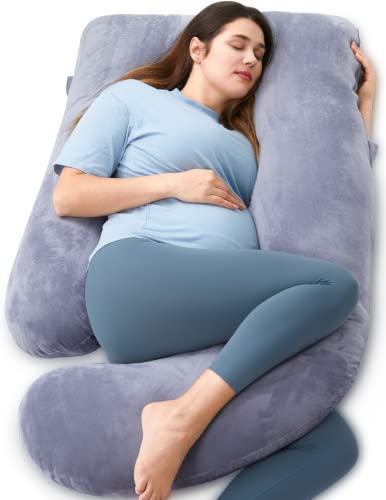 Momcozy U Shaped Full Body Maternity PillowFull U shape, supports both sides at once | A twin bump that needs support front and back | 9.2/10 | |
| 2 |  MOON PARK 57 Inch U Shaped Full Body Maternity PillowOversized U, extra length through the body | A tall frame or a very large bump | 8.8/10 | |
| 3 | Hiccapop Pregnancy Wedge PillowCompact wedge for propping the upper body | Breathlessness and reflux lying flat | 8.6/10 | |
| 4 |  Momcozy Go As You Grow Belly Bands for Twins and MultiplesExtended-range belly band, designed for multiples | Getting into and out of bed | 8.4/10 |
Rows link to the full write-up below. Scores are ours, from published specs and what buyers consistently report — we have not worn these.
By Selena H. · Last reviewed: October 2026
As an Amazon Associate, we earn from qualifying purchases. We do not set prices: the figure in each button is Amazon’s own, as of the date shown, and Amazon is authoritative when you click. How this site is funded.
This is general information, not medical advice. Talk to your midwife, OB or GP about your own symptoms. Severe or sudden pain, bleeding, a fever, or regular contractions before 37 weeks need a call to your provider now — before you buy anything.
The short answer
Sleep on your side, propped up at the shoulders, and set the whole arrangement up around 20 weeks rather than 28. That is the one thing that genuinely differs from a singleton pregnancy: the advice itself is the same, but a twin bump reaches a singleton's third-trimester size several weeks earlier, so every stage of it arrives sooner. A full U-shaped pillow plus a wedge under the shoulders is the combination that covers side sleeping, breathlessness and reflux at once.
Why twins change the timetable, not the advice
The guidance on sleep position in pregnancy does not change for multiples. Side sleeping is still what is recommended, left or right, and the reason is the same: less compression of the large vein running up the right side of the spine, which improves blood return to the heart. If you wake up on your back, you simply turn onto your side and go back to sleep.
What does change is when each problem starts. A twin pregnancy typically reaches a given uterine size six to ten weeks earlier than a singleton one, which means the discomforts that the books put in the third trimester — breathlessness lying down, heartburn at night, hip pain from side sleeping, needing to be propped up — tend to show up in the second. Our sleep positions by trimester page describes the usual progression; with twins, read it a trimester ahead of where you are.
The four problems, in the order they usually arrive
1. Breathlessness lying flat, from around 20 to 24 weeks
This is often the first thing that is noticeably different. Two babies push the diaphragm up harder and earlier, and the result is that lying flat on your back or even flat on your side feels like you cannot get a full breath. The fix is mechanical: prop the upper body up with a wedge or a stack so your chest is above your hips. Breathlessness on mild exertion is normal in pregnancy, but sudden or severe breathlessness, chest pain, or breathlessness with a cough are reasons to be seen the same day rather than to buy a pillow.
2. Heartburn at night, from around 22 to 26 weeks
Same mechanism, different organ. Upward pressure on the stomach pushes acid back into the esophagus, and lying down removes gravity from the equation. Propping the upper body helps for the same reason; so does leaving three hours between the last meal and bed. Our page on why pregnancy heartburn is worse at night covers the rest, including the pillow height that actually makes a difference, which is more than people expect.
3. Hip and pelvic pain from side sleeping, from around 24 weeks
Side sleeping is what is recommended and it is hard on the hip you are lying on, particularly once ligaments have softened and the load has increased. The answer is a pillow between the knees, high enough that your top knee is level with your hip rather than dropping forward and twisting your pelvis. If the pain is already significant, see pregnancy hip pain relief and the hip-pain pillow picks, and if the pain is in the pubic joint or deep in the pelvis rather than the hip, SPD relief is the more relevant page.
4. Turning over becoming a whole-body operation, from around 28 weeks
With a twin bump, rolling over stops being something you do in your sleep and becomes something you wake up to do. This is the single biggest reason people with twins lose sleep in the last weeks, and it is why a full U-shaped pillow is worth more here than in a singleton pregnancy: the support is already in place on the other side, so you turn and go back to sleep instead of turning, resettling three pillows, and waking up fully.
Setting the bed up
The arrangement that works for most people with twins has four parts:
- A wedge or a firm stack under the shoulders, raising the chest above the hips. This is the part that fixes breathlessness and reflux, and it is the part people leave out.
- Support under the bump, so the weight is not hanging from the abdominal wall and pulling the spine round. A U or C pillow does this; so does a folded pillow if you are not buying anything.
- A pillow between the knees, thick enough to keep the top knee at hip height.
- Something behind the back, which stops you rolling flat and makes the half-turn possible without waking.
A full U does three of those four in one object, which is why it is the main recommendation on this page. A wedge adds the fourth. Our guide to what size pregnancy pillow you need is worth reading before you order, because the main failure with twins is buying a pillow drafted for a smaller bump, and pregnancy pillow versus wedge covers why you will probably want both rather than one.
Heat, and why it matters more with two
You are carrying more, your metabolic rate is higher, and you are sleeping under a large pillow that traps air. Overheating is one of the most reliable causes of waking at 3am in a twin pregnancy, and the fixes are unglamorous: a cooling pillow cover, a cotton nightdress rather than a brushed synthetic set, a lower room temperature than feels right when you get in. Our cooling pillow picks and maternity pajamas roundup both address this directly.
Getting in and out of bed
By the third trimester this is a mechanical problem, and the technique matters. Sit on the edge of the bed, lower yourself onto your side with your knees together, then bring your legs up — never sit up straight from lying, which loads the abdominal wall and, if you have separation of the abdominal muscles, makes it worse. Reverse it to get up. A support band worn during the day takes some of the forward load off the lower back and makes the whole sequence less painful; see best maternity support belts and when to start wearing one.
What not to do
Do not sleep sitting fully upright in a chair for weeks on end, even though it feels better at first — it is hard on the lower back and hips and tends to cause swelling in the legs. Prop up in bed instead. Do not take over-the-counter sleep aids, including antihistamines marketed for sleep, without asking your midwife or doctor. And do not treat twin-specific symptoms as something to push through: twin pregnancies carry a higher rate of complications including raised blood pressure, so new or severe swelling, a bad headache, visual changes or pain under the ribs are reasons to call your maternity unit the same day, not reasons to adjust your pillows.
For the broader picture, our how to sleep when pregnant guide covers the singleton version of all of this, and the third trimester page sets out what else changes in the last stretch.
Every pick, in detail
Scores below are ours. They come from the published specification sheets and from the patterns in what buyers consistently report — not from wearing these ourselves.
Top pick · A twin bump that needs support front and back
9.2/10Momcozy U Shaped Full Body Maternity Pillow
The argument for a full U with twins is simple: you will be turning over more often than a singleton pregnancy, because no single position stays comfortable for long, and a U means the support is already there on the other side. A C or J shape has to be dragged round with you, which wakes you up properly rather than halfway.
- Shape
- U, wraps both sides
- Support
- Head, belly, back, knees
- Cover
- Removable, machine washable
- Bed footprint
- Wide — plan for a queen or larger
What works
- Supports belly and back at the same time, so turning over is easy
- No repositioning in the night, which is the main cause of full waking
- Props the upper body as well as the bump
What it gives up
- Takes up most of a queen bed, which a partner will notice
- Bulky to wash and slow to dry
- Too warm for some people in high summer
Skip it ifyou share a double bed and cannot give up half of it.
#ad · affiliate link · price as of November 28, 2026
Pick 2 · A tall frame or a very large bump
8.8/10MOON PARK 57 Inch U Shaped Full Body Maternity Pillow
A standard pregnancy pillow is drafted for a singleton bump on an average-height frame, and a twin pregnancy at 30 weeks is frequently neither. The extra length here is the point: it reaches from head to knee without the lower end stopping short, which is where standard U pillows fail on a tall body.
- Shape
- U, wraps both sides
- Length
- 57 in
- Cover
- Removable
- Bed footprint
- Wide
What works
- Longer body reaches from head to knees on a tall frame
- Larger loft copes with a bigger bump than a standard U
- Even support along the whole length rather than at two points
What it gives up
- Needs a king bed to work properly
- Heavy to move once you are in it
- Overkill for an average-height singleton pregnancy
Skip it ifyou are under about five foot four or sleeping in a double.
#ad · affiliate link · price as of November 28, 2026
Pick 3 · Breathlessness and reflux lying flat
8.6/10Hiccapop Pregnancy Wedge Pillow
The piece almost everyone with twins needs and most people buy late. A twin pregnancy puts more upward pressure on the diaphragm and the stomach, earlier, so lying flat becomes uncomfortable or genuinely breathless weeks before it would in a singleton pregnancy. A wedge under the shoulders fixes that without a hospital bed.
- Shape
- Wedge
- Support
- Belly, back or under the hip
- Bed footprint
- Pocket-sized
- Firmness
- Two-sided, firm and soft
What works
- Props the upper body, which is what breathlessness lying flat needs
- Small enough to use alongside a full U pillow
- Also works under the bump, or behind the back for a third position
What it gives up
- Firm foam takes a few nights to get used to
- Does nothing for hip or back pain on its own
- Can slide down the bed overnight
Skip it iflying flat is still comfortable for you.

#ad · affiliate link · price as of November 28, 2026
Pick 4 · Getting into and out of bed
8.4/10Momcozy Go As You Grow Belly Bands for Twins and Multiples
Not a sleep product, and here because the moment a twin bump hurts most is the moment of rolling over and the moment of standing up. A band with an adjustment range built for multiples takes some of the forward weight off the abdominal wall and the lower back during exactly those movements, which is where a pillow cannot help.
- Type
- Extended-range belly band
- Designed for
- Twins and multiples, larger bumps
- Closure
- Hook-and-loop, wide adjustment
- Support
- Belly lift plus lower back
What works
- Adjustment range built for a twin bump rather than stretched to fit
- Takes forward weight off the lower back when standing up
- Useful in the day as well as around bedtime
What it gives up
- Not worn while actually asleep
- Bulky under fitted clothes
- Hook-and-loop closure catches on knitwear
Skip it ifyour discomfort is in the hips rather than the lower back or abdomen.
#ad · affiliate link · price as of November 28, 2026
Questions people actually ask
What position should I sleep in when pregnant with twins?
On your side, left or right, with your upper body propped up. The side-sleeping recommendation is the same as for a singleton pregnancy; what differs is that you will probably need the propping several weeks earlier.
If you wake up on your back, just turn onto your side. Waking on your back is normal and is not something to worry about retrospectively.
When does sleeping get harder with twins?
Typically six to ten weeks earlier than in a singleton pregnancy, because a twin uterus reaches any given size that much sooner. Many people notice breathlessness lying flat from around 20 to 24 weeks.
The practical implication is to set your bed up early. Buying a pregnancy pillow at 28 weeks is normal advice for one baby and late advice for two.
Do I need a bigger pregnancy pillow for twins?
Often yes, in length rather than in thickness. Standard pillows are drafted around a singleton bump on an average-height frame, and an oversized U reaches from head to knees without stopping short.
The other consideration is bed size. A full U pillow takes up most of a queen bed, so if you are in a double, a C or J shape plus a separate wedge may be more realistic.
Why can't I breathe lying down when pregnant with twins?
Two babies push the diaphragm upwards harder and earlier than one, so lying flat leaves less room for the lungs to expand. Propping the upper body so the chest sits above the hips is the usual fix.
Mild breathlessness is a normal part of pregnancy. Sudden or severe breathlessness, chest pain, or breathlessness with a cough should be assessed the same day.
Is it safe to sleep on my back with twins?
Side sleeping is what is recommended from the second trimester onward, for twins as for a single baby, because it avoids compressing the large vein that returns blood to the heart.
In practice most people with a twin bump find lying flat on their back uncomfortable long before it becomes a question, and waking up having rolled onto your back is not something to worry about. Turn onto your side and go back to sleep.
Can I take anything to help me sleep in a twin pregnancy?
Not without asking your midwife or doctor first, and that includes over-the-counter antihistamines sold as sleep aids and herbal preparations.
The things that reliably help are mechanical and behavioral: propping up, a pillow between the knees, a cooler room, breathable sleepwear, and leaving three hours between the last meal and bed.
Sources
- NHS. Tiredness and sleep problems in pregnancy
- American College of Obstetricians and Gynecologists. Back Pain During Pregnancy
- MedlinePlus, US National Library of Medicine. Aches and pains during pregnancy
- MedlinePlus, US National Library of Medicine. Common symptoms during pregnancy
- American College of Obstetricians and Gynecologists. Preeclampsia and High Blood Pressure During Pregnancy
Who wrote this
Selena H.
Selena owns Bump & Bolster and researches and writes every page herself. She built the site around the problems pregnancy throws at you in the order they arrive: sleep first, then pain, then nothing fitting, then recovery.